Skid Plates 101: Do You Really Need Them?
If you've spent any time researching off-road builds you've seen skid plates listed alongside lift kits and tires as a must-have upgrade. But unlike a lift kit — where the visual transformation is immediate and obvious — skid plates do their best work invisibly, protecting components you hope you never think about. This guide explains what skid plates actually do, which ones matter most for your build, and how to decide what your rig actually needs.
What Are Skid Plates?
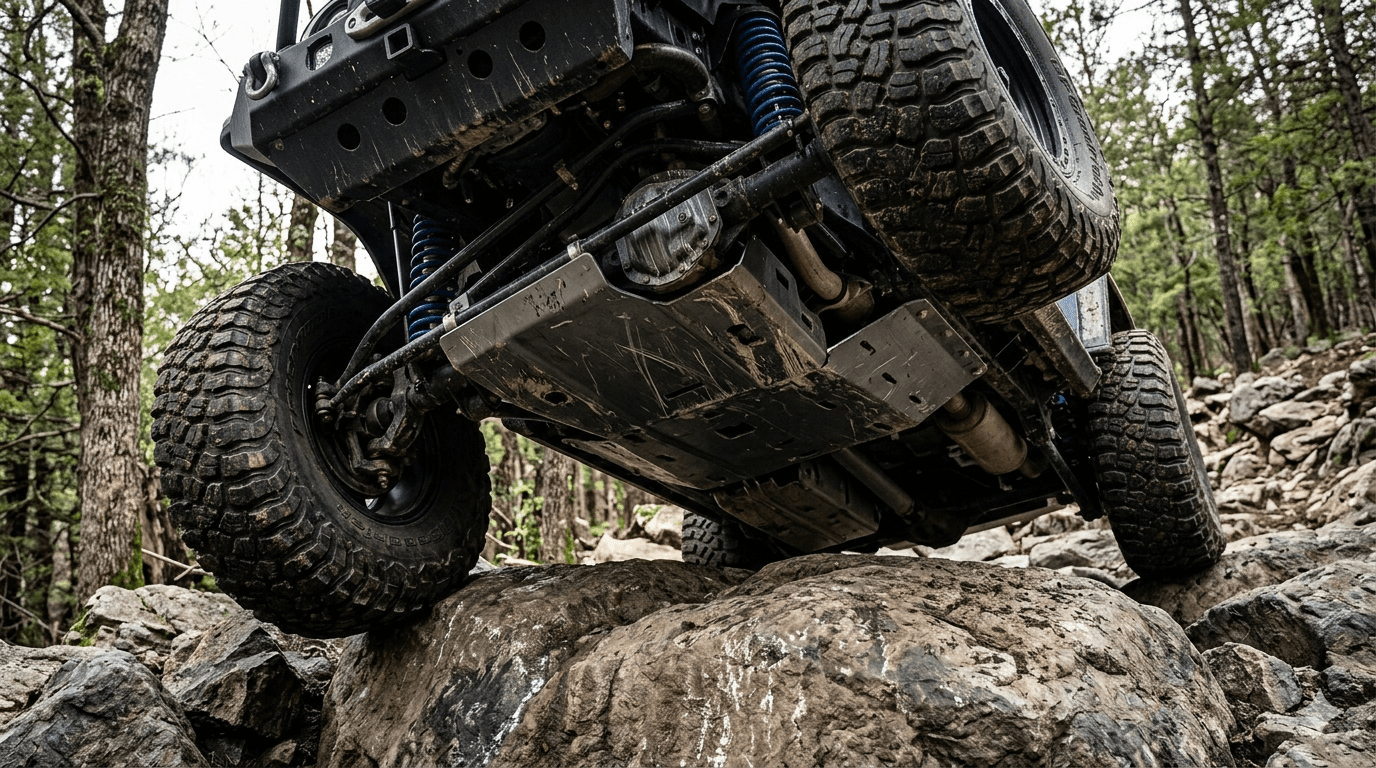
Skid plates are protective armor panels — typically steel or aluminum — mounted underneath a vehicle to shield critical components from rock strikes, stumps, ledges, and debris encountered on the trail. The name comes from what happens when you make contact: the plate skids across the obstacle rather than allowing it to punch into a vulnerable component underneath.
From the factory, most trucks and Jeeps come with minimal underbody protection — thin stamped steel shields on some models, nothing meaningful on others. Factory skid plates are designed to meet a cost and weight target, not to absorb repeated trail abuse. Aftermarket skid plates are a different category entirely.
What Do Skid Plates Protect?
Different skid plates protect different areas of the undercarriage. Understanding what's under your vehicle helps you prioritize:
Engine and transmission skid plate. Covers the oil pan, transmission housing, and in many cases the transfer case. This is the most universally recommended skid plate — an oil pan strike on a rock can end a trail run and cause serious engine damage. If you're only adding one skid plate, this is the one.
Transfer case skid plate. The transfer case is one of the most exposed and expensive components on a 4WD vehicle. A dedicated transfer case skid plate adds meaningful protection on vehicles where the engine/transmission skid doesn't extend far enough rearward.
Fuel tank skid plate. On vehicles where the fuel tank is positioned low in the chassis — which is most of them — a fuel tank skid plate is a high-priority addition for anyone running moderate to serious trails. A punctured fuel tank is a trip-ending emergency at best and a safety hazard at worst.
Differential skid plates. Front and rear differential covers and skid plates protect the axle housings and diff covers from direct rock strikes. Particularly important on vehicles running lower to the ground or on technical terrain with sharp rock features.
Steering and suspension skid plates. Protect tie rods, drag links, and suspension components from trail debris. More relevant on builds running lower lift heights or on highly technical terrain where steering components are exposed.
Steel vs. Aluminum — Which Is Right for You?
This is the most common skid plate debate and the answer depends on how you use your vehicle.
Steel skid plates are heavier but offer superior impact resistance. A quarter-inch steel plate can absorb repeated rock strikes without deforming — it will scratch, scuff, and show its work, but it won't crack or fail under impact. Steel is the right choice for serious rock crawlers and trail rigs that regularly encounter sharp, high-impact terrain. The tradeoff is weight — a full steel skid plate package on a Wrangler can add 50–80 lbs to the undercarriage.
Aluminum skid plates are significantly lighter and still provide meaningful protection against trail debris, stumps, and moderate rock contact. Quality aluminum skids — typically 3/16" to 1/4" aircraft-grade alloy — are the right choice for overlanders and trail drivers who encounter occasional obstacles but aren't running technical rock lines regularly. The weight savings matter on a platform already carrying recovery gear, camping equipment, and a full tank of fuel.
The honest take: for most drivers who weekend on moderate trails, aluminum is entirely sufficient and the weight savings are genuinely worthwhile. For dedicated rock crawlers who regularly put steel to rock, the added impact resistance of steel is worth the weight penalty.
The Brands We Carry
Not all skid plates are built the same. At OK4WD we carry brands that we'd put on our own rigs — here's what sets each one apart:
Rival 4x4 — Rival has built a strong reputation in the overlanding community for precision-fit aluminum skid plates that don't compromise on protection. Their plates are engineered to exacting tolerances, maintain access to factory service points, and shed weight without shedding capability. For overlanders and trail drivers who want serious protection without the weight penalty of steel, Rival is one of the strongest options on the market. Their catalog spans a broad range of platforms making them a go-to across our customer base.
Rock Hard 4x4 — Rock Hard builds heavy-duty steel skid plates for drivers who put their rigs through serious abuse. Made in the USA, their plates are designed for repeated high-impact contact — the kind you encounter in rock gardens, on technical ledges, and on terrain where you're genuinely sliding steel across stone. Rock Hard's fitment catalog is deep across Jeep platforms and expanding across popular truck platforms. If you're building a dedicated trail rig and weight isn't your primary concern, Rock Hard is the steel standard.
Clayton Off Road — Clayton is a Jeep specialist that has expanded their precision engineering into skid plate protection. Known primarily for their suspension systems, Clayton's skid plates reflect the same attention to fitment and construction quality that defines their other products. Their plates integrate cleanly with Clayton suspension components for customers building a complete system, and their quality holds up whether you're running aluminum or steel configurations. A strong choice for customers who want a cohesive build from a single trusted manufacturer.
Do You Actually Need Skid Plates?
The answer depends on three things: where you drive, how you drive, and what's under your vehicle.
If you stay on maintained forest roads and light dirt trails — factory protection or a basic engine/transmission skid may be all you need. The risk of a meaningful undercarriage strike on smooth dirt is low.
If you run moderate trails with rocky sections, water crossings, and uneven terrain — an engine/transmission skid and fuel tank skid are strongly recommended. These are the two highest-consequence components to protect and the investment is modest relative to the repair cost of damage.
If you run technical trails, rock gardens, or regular off-camber terrain — a full skid plate package covering engine, transmission, transfer case, fuel tank, and differentials is the right approach. At this level of use, skid plates aren't optional equipment — they're insurance.
Vehicle-specific considerations matter too. Some platforms have more vulnerable undercarriage layouts than others. Jeep Wranglers have a relatively exposed transfer case and front differential that benefit significantly from dedicated protection. Toyota Tacomas have a well-known vulnerability at the front differential and steering rack. Knowing your specific vehicle's weak points helps prioritize your skid plate investment.
Materials and Construction — What to Look For
Beyond the steel vs. aluminum decision, a few construction details separate quality skid plates from ones you'll regret:
Thickness. For steel, 3/16" is a minimum for meaningful protection — 1/4" is preferred for technical use. For aluminum, 3/16" to 1/4" aircraft-grade alloy is the standard for quality aftermarket plates.
Mounting hardware. Skid plates are only as good as their mounting points. Look for kits that use grade 8 hardware and mount to the frame rather than the body — frame-mounted plates transfer impact loads directly to the vehicle's structure rather than through body panels.
Drainage. Quality skid plates include drainage holes to prevent water, mud, and debris from accumulating between the plate and the component it protects. A plate that traps moisture against your oil pan creates a new problem while solving another.
Fit and finish. Plates that fit precisely are easier to install, less likely to rattle, and less likely to interfere with factory drain plugs, fill points, and service access. A well-designed skid plate makes routine maintenance straightforward — a poorly designed one becomes a reason to skip it.
A Note on Weight
Every pound of skid plate armor is a pound added to your unsprung or sprung weight — and it adds up. A full steel skid package on a Wrangler or Tacoma can approach 80–100 lbs. This isn't a reason to skip protection, but it is a reason to match your skid plate selection to your actual use case. An overlander who never runs technical rock lines doesn't need the weight penalty of a full steel package — quality aluminum covers the realistic risk profile at a fraction of the weight.
How Much Do Skid Plates Cost?
| Coverage | Approximate Cost |
|---|---|
| Engine/transmission skid only | $250–$600 |
| Engine, transmission & transfer case | $400–$800 |
| Full package (engine, trans, t-case, fuel tank) | $800–$2,000 |
| Full package with diff covers | $800–$2,000+ |
Bottom Line
Skid plates are one of the highest-value upgrades you can make to an off-road build — relatively low cost, straightforward installation, and protection against failures that can end a trip and cause serious damage. Prioritize engine and transmission protection first, add fuel tank coverage if you run moderate to serious trails, and build out from there based on how and where you drive.
At OK4WD we carry Rival, Rock Hard 4x4, and Clayton Off Road across a broad range of platforms — aluminum and steel, entry coverage to full packages. Stop in or give us a call and we'll match you to the right protection for your rig and how you use it.
OK4WD has been building and protecting Jeeps and trucks since 1979. Browse our skid plate inventory or talk to our team about the right protection package for your build.
FAQs
Will skid plates affect my ground clearance?
Quality skid plates add minimal thickness — typically 3/16" to 1/4" — below your existing components. On a lifted vehicle this is negligible. On a stock-height vehicle it's worth confirming with your installer that the plate clears the terrain you're running.
Can I install skid plates myself?
Most skid plate installs are DIY-friendly — they bolt to existing frame points and don't require specialized tools beyond basic hand tools and a floor jack. That said, confirming correct fitment and torque specs matters, and a shop install ensures nothing is missed.
Do skid plates require maintenance?
Minimal. Inspect them periodically for deformation, cracks, and loose hardware — particularly after hard trail use. Steel plates benefit from touch-up paint on scratched areas to prevent rust. Aluminum plates are largely maintenance-free.
Are factory skid plates good enough?
On most vehicles, factory skid plates are a starting point at best. They're designed to a cost target and provide minimal protection against serious trail use. Aftermarket plates are thicker, cover more area, and are designed specifically for off-road conditions.