Fisher Snowplows at OK4WD: How to Choose, Install, and Maintain a Plow Before the First Storm
Every year the same thing happens in northwest New Jersey and the Lehigh Valley. The first real snow is forecast, phones start ringing, and install bays fill up fast. The people who plow all winter without stress are the ones who made the decision weeks earlier. It’s mid-November, which makes now the time. As a Fisher dealer, we’re helping homeowners, landscapers, and commercial operators get plow-ready before the season starts. This guide covers what to know before you buy: how to match a plow to your vehicle, what a proper install involves, how to prepare your truck or Jeep, and what we offer at our Stewartsville shop.
Why Fisher
Fisher has been a recognizable name in snowplows for decades, and it’s one many professional operators standardize on. For a plow, reputation counts for something. This is equipment that works in the worst weather, usually before sunrise, and downtime in a storm costs you money or leaves you stuck at home.
Two things matter as much as the brand. First, the plow has to be matched correctly to your vehicle. Second, the install has to be done right. Even a great plow performs poorly on the wrong truck or with a rushed install, which is why we treat fitment and installation as the core of the job rather than an add-on.
Start with Your Vehicle, Not the Plow
The most common mistake in plow buying is picking a plow first and fitting the truck to it later. It works the other way around. Your vehicle determines what you can safely run.
Front axle weight rating. A plow and its mounting hardware add significant weight to the front of the vehicle. Every vehicle has a front axle weight rating, and the plow manufacturer publishes application guides that match specific plows to specific vehicles. Exceeding the rating stresses the front suspension, brakes, tires, and steering, and it affects handling.
Vehicle type and weight. A half-ton truck, a heavier-duty truck, and a Jeep each call for different plow sizes and configurations. A plow that’s right for a one-ton work truck would be too heavy for a lighter vehicle, and a plow that’s too light for your truck leaves capability on the table.
Your use case. A homeowner clearing a long driveway needs something different from a landscaper running a dozen commercial lots or a municipality-style route. Blade width, blade style, and how often and how long you plow all shape the right choice.
Added front-end weight and ballast. Many setups benefit from added rear weight or other adjustments to keep the vehicle balanced and the steering responsive. We account for this when we spec your install.
We install on all vehicle types, from Jeeps to half-ton trucks to heavier-duty work trucks, and we’ll tell you honestly if a particular plow and vehicle combination isn’t a good match.
Choosing the Right Plow Style
Fisher offers a range of plow styles, and which one fits depends on how and where you plow.
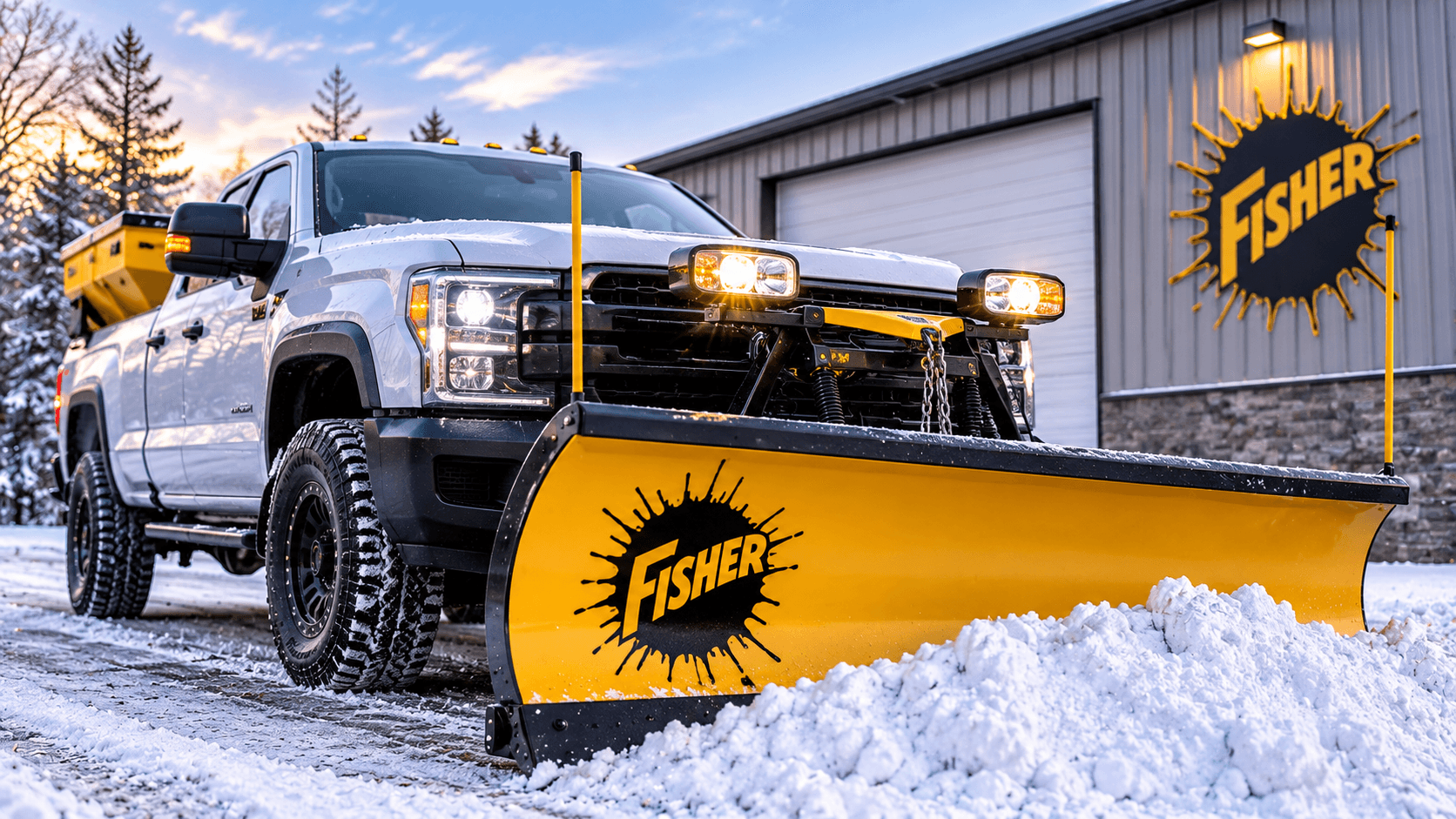
Straight blade plows. The classic design. A straight blade is simple, durable, and well suited to driveways, parking lots, and general-purpose plowing. It pushes snow in a straight line or angles left and right.
V-style plows. A V-plow’s two wings can form a V to cut through deep drifts and windrows, scoop snow forward to carry it, or angle to one side like a standard blade. They’re popular with commercial operators who need versatility and productivity across varied conditions.
Blade width and height. A wider blade clears more per pass but adds weight and demands more from the vehicle. Blade height affects how much snow you can carry and how well the plow handles deeper snow.
Mounting systems. Modern plows use quick-attach mounts that let you drive up, connect, and plow, then remove the plow when winter ends and leave the vehicle looking like it did before. We’ll help you choose a mounting setup that fits your vehicle and how you plan to use it.
If you tell us how you plow and what you drive, we’ll narrow this down quickly.
What a Proper Plow Install Includes
A plow install is more than bolting on a frame. A quality install covers several things:
Mounting hardware and frame. The plow mount attaches to the vehicle’s frame structure, and the fit, torque, and hardware quality matter for safety and longevity.
Wiring. Plows need dedicated power and control wiring: connections to the battery, power for the hydraulic pump, control wiring routed to the cab, and plow lights tied into the vehicle’s electrical system. Poor wiring is one of the most common causes of plow problems. Corroded connections, undersized wire, and loose routing lead to intermittent failures at the worst moments.
Plow lights. A plow blade can block your headlights. Plow-mounted lights restore visibility, and they need to be aligned and wired properly. Poorly aimed lights blind oncoming drivers and don’t help you see.
Controls. The in-cab controller lets you raise, lower, and angle the blade. We set it up so it’s convenient and reliable to use.
Headlight and ride-height considerations. The added weight changes the vehicle’s front-end stance. We check ride height, suspension, and alignment so the vehicle drives and handles properly with the plow on.
Testing. We test the entire system before it leaves our shop, including raising, lowering, angling, lights, and electrical connections.
Prepare Your Vehicle for Plow Season
Plowing is hard on a vehicle. Heavy loads, cold temperatures, repeated stops and starts, and salt exposure all add up. A little preparation prevents most winter failures.
Battery and charging system. A plow adds significant electrical demand, and cold weather reduces battery output. Have your battery load tested before the season, and replace it proactively if it’s marginal. A strong charging system matters when you’re running the plow pump, lights, and heater at the same time.
Fluids. Check coolant protection, use winter washer fluid, and make sure your engine oil is appropriate for cold weather. Hydraulic plow fluid should also be checked and kept at the right level.
Tires. Traction is everything in winter, and plowing puts extra weight on the front tires. Check tread depth, pressure, and the condition of your tires before the first storm. Tires rated for snow make a significant difference.
Brakes and steering. Added front-end weight and repeated stops stress the front brakes and steering components. Inspect them before the season.
Lighting. Make sure your plow lights, headlights, and auxiliary lighting work and are aimed correctly. Visibility during early-morning plowing is a safety issue.
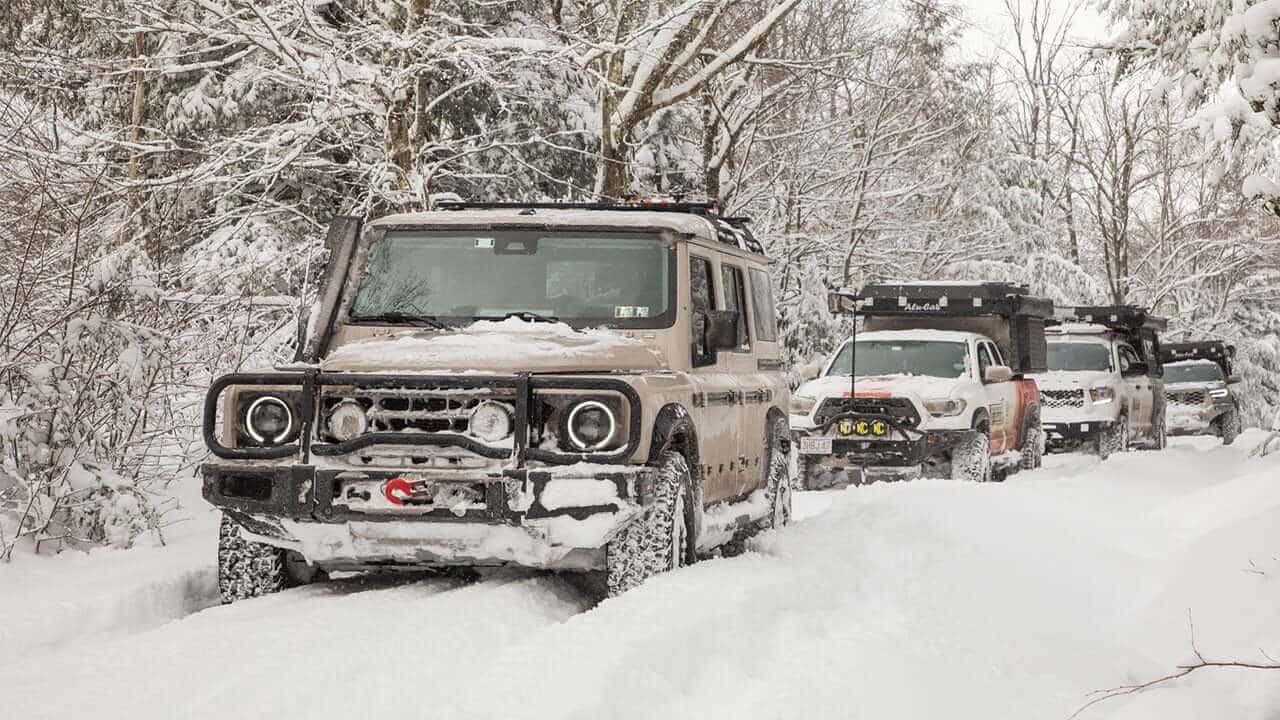
Winter recovery gear. Plow trucks get stuck too, often in places that are hard to reach. A shovel, traction boards, and a kinetic recovery strap are inexpensive insurance. Our winter off-roading guide covers recovery gear in more detail.
Protect Your Truck from Salt and Brine
Plowing means being out in the worst of winter road conditions, often right behind or ahead of salt trucks. Salt and brine are the biggest long-term threat to the frame, brake lines, and suspension of a plow vehicle.
Our shop recommends Fluid Film for ongoing corrosion protection. It penetrates seams and crevices and stays flexible rather than cracking. For bare or exposed steel, a zinc-based undercoating adds a more durable base layer. Applying protection before the season, and rinsing the undercarriage regularly through winter, extends the life of your vehicle and your plow components. Our undercarriage care guide walks through the process.
Maintaining Your Plow Through the Season
A plow that’s maintained works when you need it. A few habits make a big difference:
Rinse after use. Salt and slush corrode plow components. A quick rinse after each plowing session helps, as long as you dry moving parts where possible.
Check hydraulic fluid. Low or contaminated fluid reduces performance. Check it as part of your routine.
Inspect wiring and connections. Look for corrosion, loose connectors, and damaged wiring. Dielectric grease on connections helps protect them from moisture.
Check the cutting edge. A worn cutting edge reduces plowing performance and can damage your driveway or lot. Replace it when it’s worn.
Inspect hardware. Bolts, pins, and hardware can loosen with vibration and impact. Check them periodically.
Lube moving parts. Keep pivot points and moving components lubricated as the plow manufacturer recommends.
Store it correctly in the off-season. When winter ends, take the plow off, clean it, protect bare metal, and store it properly. A little care in spring makes the next season’s startup easier.
We offer seasonal service for Fisher plows, and we’re happy to do a pre-season inspection and fix small problems before they become storm-day failures.
Fisher Spreaders and Accessories
A plow is only part of a winter setup. We also offer Fisher spreaders and accessories that make plowing and snow management more complete, including equipment for treating surfaces after you’ve cleared them. If you’re servicing a driveway, lot, or property where ice control matters, ask us about options that fit your vehicle and use.
Parts and Ordering
We sell small, shippable Fisher parts online, so you can get common wear items and small components without a trip. Plows and larger items are pickup only. We’ll coordinate your pickup and, if you want it, schedule your installation at our Stewartsville shop. For anything you’re unsure about, call us at 908-454-6973 before ordering so we can confirm the right part for your equipment.
Where We Are and Who We Serve
OK4WD is located on Route 57 in Stewartsville, New Jersey. We serve plow customers across Warren, Hunterdon, Sussex, and Morris counties and throughout the Lehigh Valley in Pennsylvania. If you’re within driving distance, we’d like to get you set up. Many of our plow customers are drivers who already trust us with lifts, tires, and winter prep, and we’re glad to help new customers too.
Why Book Before the First Storm
Plow installs have a seasonal rush. Once the forecast calls for snow, shop schedules tighten quickly. Booking now means you get a convenient install date, time to ask questions without pressure, and a plow that’s ready before you need it. Waiting until the first storm often means waiting weeks.
Bottom Line
A plow is a serious investment, and the right one for you comes down to your vehicle, how you plow, and how well it’s installed and maintained. Fisher gives you proven equipment, and a proper install and good seasonal prep make it work when the snow comes.
At OK4WD we handle the whole process: matching a plow to your vehicle, installing it with proper mounting and wiring, adding spreaders and accessories, and servicing it through the season. Stop into our Stewartsville location or give us a call to get on the schedule before the first storm.
OK4WD has been building and servicing Jeeps and trucks since 1979 and serves Warren, Hunterdon, Sussex, and Morris counties and the Lehigh Valley. Schedule your plow consultation and installation today.
FAQs
What plow fits my truck or Jeep?
It depends on your vehicle’s front axle weight rating, configuration, and how you plan to plow. Call us or stop in with your year, make, and model and we’ll match you with the right plow.
Can I put a plow on a Jeep?
In many cases, yes, with the right plow and mounting hardware. Fitment depends on the specific Jeep and plow, and we’ll confirm it before you buy.
How long does installation take?
It varies by vehicle and plow system. We’ll give you a realistic time estimate when you schedule, and we’ll walk you through operation when we hand over the vehicle.
Do I need to take the plow off in summer?
Most quick-attach systems are designed so you can remove the plow when the season ends. It protects the plow from the elements and restores your vehicle’s normal appearance and handling.
Can I buy a plow online?
Small, shippable parts can be ordered online. Plows are pickup only so we can confirm fitment and handle the installation properly.
Will a plow affect my vehicle’s warranty?
It can, depending on the vehicle manufacturer’s policies. Check your warranty terms, and talk to us if you have questions. We’ll install according to the plow manufacturer’s application guidelines.
Do you offer service on plows I didn’t buy from you?
Call us and tell us what you have at 908-454-6973. We’ll let you know what we can do.