Stock Tires & Reading Tire Code
In this Article, we will cover:
- What does stock mean?
- What is P-Metric Tire Code
- How do I read Tire Code?
- How do I know what size stock tires my car uses?
What does stock mean?
In terms of vehicle, a stock car means that a car has not been modified from its original factory configuration. For example, if you mounted and balanced larger tires then recommended by your vehicle's manufacturer the tires no longer stock.
What is P-Metric Tire Code?
P-Metric Tire Code is a standardized, alphanumeric system used in the automotive industry for tire sizing. An alternate format of tire sizing is flotation tire sizing. The main difference between these codes is that one uses the metric system (P-Metric) and other uses inches (Flotation).
Whether P-Metric or Flotation, this label is always molded into the side wall of the tire and denotes the specific dimensions of that tire as well as other important information and limitations such as load bearing ability and maximum speed.

How do I read Tire Code?

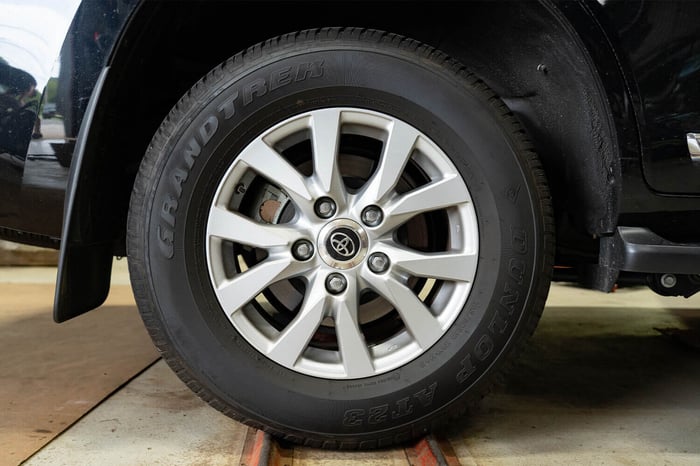
This Tire's size is 225/60R17 99H.
Tire Type: A letter at the beginning of the size description denotes what type of tire a tire is. For example:
- P= Passenger or P-Metric
- LT = Light Truck
- ST = Special Trailer
- T = Temporary
The absence of a letter indicates that the tire is Euro-Metric. The main difference is that Euro-Metric tires may have different load carrying capacities than their P-Metric counterparts. The tire pictured above is Euro-Metric because it has no letter. If it was P-Metric, it's measurement would appear as P225/60R17.
Tire Width (225): Tire Width is the approximate section width or width of the tire from sidewall to sidewall. The larger the number, the wider the tire.
Aspect Ratio (60): Aspect Ratio is the nominal sidewall height reflected as a percentage of section width. So the sidewall height on this tire is 60% of 225 or approximately 135 millimeters.
Construction (R): The “R” stands for radial construction, which is the industry standard for passenger car and light truck tires. A "D" would indicate that the tire has diagonal bias construction.
Rim or Bead Diameter (17): The following 17 represents (in inches) diameter of the beads or hole of the tire, which means that this tire is designed to fit on a rim with a 17-inch diameter.
Load Index (99): Load Index indicates the maximum load carrying capacity of the tire. For safety and performance of your vehicle, it is important to install tires with a load index that meets or exceeds your vehicle manufacturer's specification. This tire is rated at 99 or
1709 lbs.
Speed Rating (H): The final letter designates the maximum speed at which a properly installed and inflated tire can be driven on. This tire is demarcated with an H, which indicates that it can be driven up to speeds of 130 mph.
- L - 75 mph
- M - 81 mph
- N - 87 mph
- P - 93 mph
- Q - 99 mph
- R - 106 mph
- S - 112 mph
- T - 118 mph
- U - 124 mph
- H - 130 mph
- V - 149 mph
- W - 168 mph
- Y - 186 mph
- (Y) - more than 186 mph
U.S. Department of Transportation Markings:
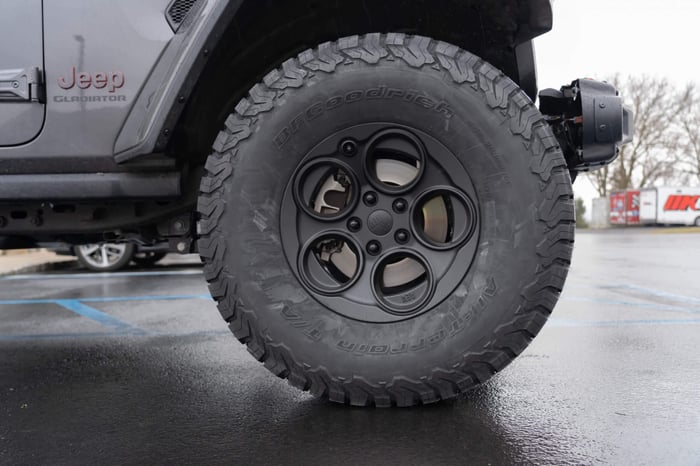
All tires must have a US DOT marking. This shows that the tire has passed all minimum standards for Sale in the US. The marking displays the manufacturer (BF = BFGoodrich), the plant the tire was made (41), as well as the size (PH11). The last digits 1319, indicate the week and year that the tire was produced. This tire was made in the 13th week of 2019.

Other important markings that can be found on your tire is Maximum Inflation and Load Ratings as well as Uniform Tire Quality Grading (UTQG). Mandated by the DOT all tires must provide their UTQG rating, which provides information on treadwear, traction, and temperature resistance of the tire.
For further instruction, Car and Driver provides a comprehensive guide to reading a tire sidewall.
How do I know what size stock tires my car uses?

There are three places you can find the proper or stock tire size of your vehicle:
- Sidewall of your vehicle's tires
- Tire and Loading Information Chart
- Owner's Manual
Sometimes the tire and loading placard, can also be found attached on the glove door or, if a truck, on inside of the trunk lid.
We'd love to hear from you!
Send us your comments and questions about your vehicles' tires and fitment.