OK4WD Builds and Articles
- Finding the Right Balance Between Space and Freedom
- Learning to Live Outside
- The Less Glamorous Side of Extended Travel
- The Constant Evolution of Storage and Organization
- When Newfoundland Put the Camper to the Test
- Two Tacomas and a Better Understanding of Power
- The Freedom of a Midsize Truck
- Learning What We Actually Need
- What to Consider When Choosing a Family Camper
- What 51 Days Together Taught Our Family
- Would We Choose the ModCAP Again?
- FAQs
Two summers, two Toyota Tacomas, three people, one 90-pound dog, thousands of miles of adventure, and 51 days together as a family in an Alu-Cab camper...
One evening along the coast of Newfoundland, we found ourselves preparing fresh fish that some locals had given us while whales surfaced offshore. We were cooking outside our truck camper, watching the ocean, and enjoying one of those moments that you could never really plan for.
Those are the kinds of moments that have shaped the way our family travels.
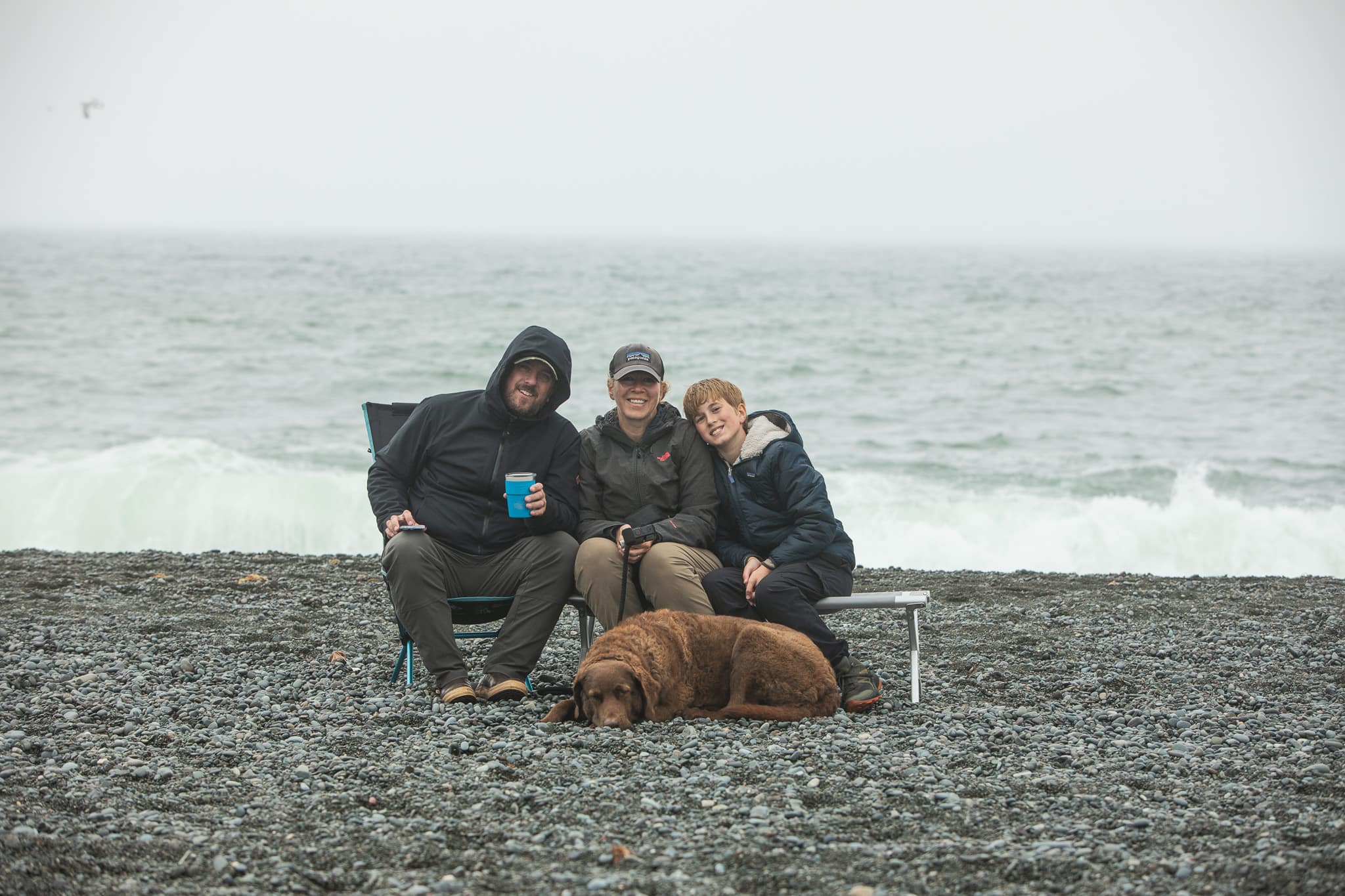 Family photo on St. Vincent Beach, Newfoundland. Pictured from left, Jason (the author), Stephanie, and Ketcher, with Cooper resting at their feet.
In the summer of 2025, my wife Stephanie, our son Ketcher, our 90-pound Chesapeake Bay Retriever "Cooper," and I spent 30 days exploring Newfoundland in an Alu-Cab ModCAP Family Camper mounted on our 2020 Toyota Tacoma. And this past summer, we headed west for another three weeks, traveling through South Dakota, Montana, and Idaho with the same camper mounted on a new 2025 Tacoma. Both trucks were short-bed models, and between the two adventures, we spent 51 days living out of a midsize pickup with everything we needed to work, cook, sleep, and explore.
When people hear about living 51 days together as a family in an Alu-Cab camper, the first question is usually about space and I can understand why. Ketcherd is 12 years old and practically a small adult, and Cooper certainly isn't your average lap dog. But after two extended trips in two years, we've learned to appreciate the amount of room inside the ModCAP Family Camper.
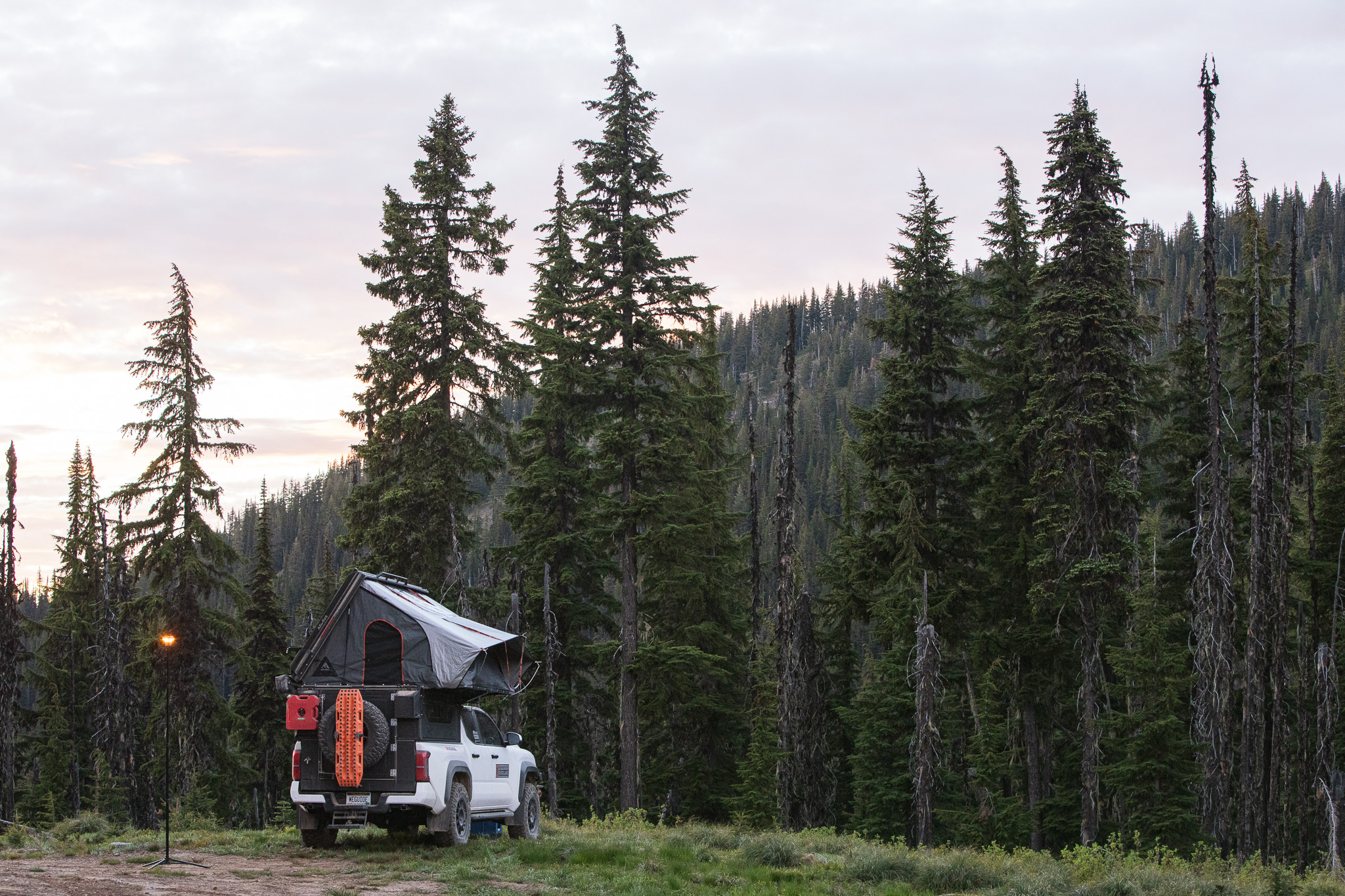 Camp for the night somewhere in the Idaho wilderness outside Wallace.
Finding the Right Balance Between Space and Freedom
When we started looking at campers, our priorities were fairly simple. We wanted enough sleeping space for the entire family, but we weren't interested in giving up the capability of a midsize four-wheel-drive truck. We enjoy traveling remote roads, exploring places that aren't always accessible to larger vehicles, and having the flexibility to change our plans depending on what we find along the way. The ModCAP Family Camper offered the largest sleeping configuration that suited those needs, and the more time we've spent living in it, the more we've appreciated that balance.
The upper sleeping area is surprisingly spacious, with enough room to leave bedding in place and even add thicker mattresses or additional foam if you want more comfort. We arranged ourselves lengthwise, sleeping from the front toward the back of the truck with the hatch closest to the rear door left open. Ketcher slept on the overhang while Cooper settled in between Stephanie and me. We never really changed that arrangement during either trip because it worked so well. With the windows zipped closed, the sleeping area becomes incredibly dark and comfortable, sometimes making it difficult to convince ourselves to get out of bed in the morning.
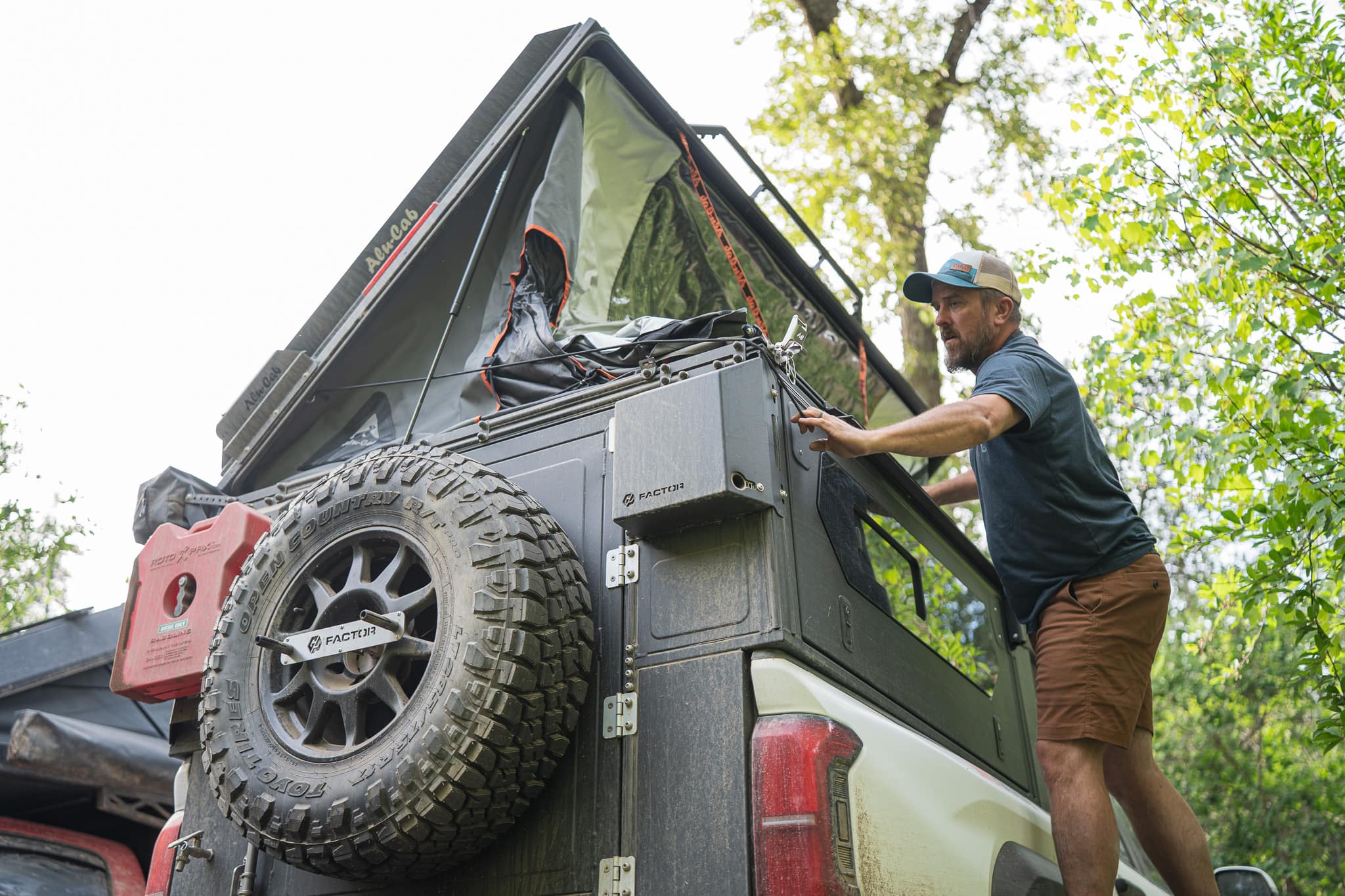 Setting up the camper is very straightforward and can be completed in less than 2 minutes.
One of the features I hadn't fully appreciated until we started traveling for weeks at a time was how the camper creates two usable spaces. Since I work remotely, there were mornings when Stephanie and Ketcher wanted to sleep in while I needed to get started with work. They could stay upstairs, and I could settle into the lower portion of the camper without disturbing them. That separation made it easier to maintain a routine without everyone having to follow the same schedule.
The rear entry door is another feature that has become indispensable. With both Tacomas having short beds, being able to swing open a full-height rear door and step directly into the camper makes everyday life much easier. There's no climbing over the tailgate or crawling through an awkward opening. It's a simple design detail, but after getting in and out of the camper dozens of times each day, you begin to appreciate just how much those little conveniences matter.
Looking back, living 51 days together as a family in an Alu-Cab camper gave us a much better understanding of which features truly matter during extended travel. Sleeping space and weather protection are important, but the conveniences you use every morning and evening are what make a camper enjoyable over the long term.
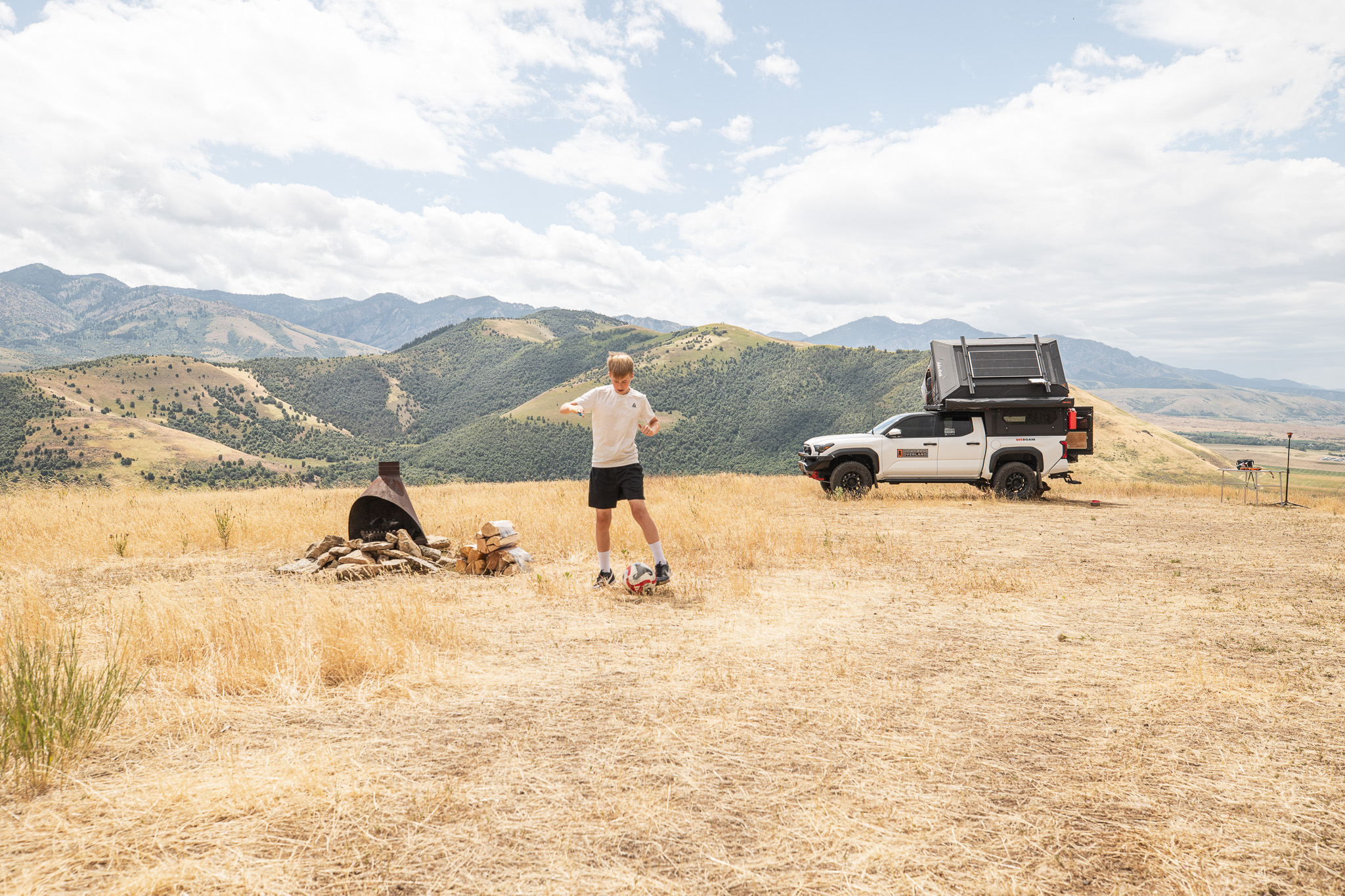 Ketcher sharpening his soccer skills from the summit of a Hipcamp property in Idaho.
Learning to Live Outside
For us, traveling in a truck camper has never been about recreating all the comforts of home inside a vehicle. It's about having a comfortable place to sleep and shelter from the weather while spending as much time as possible outside. Most of our meals were prepared outdoors, and the kitchen became part of our daily camping routine rather than something we needed to build into the camper itself.
We carried a reliable cook stove that handled just about everything we needed, including the seemingly endless supply of noodles that Ketcher enjoys. I also packed a separate Jetboil for making coffee, although looking back, I probably could have left it at home and used the main stove instead. That's one of the things you start to recognize during extended travel. Just because you own a useful piece of camping equipment doesn't necessarily mean you need to bring it along.
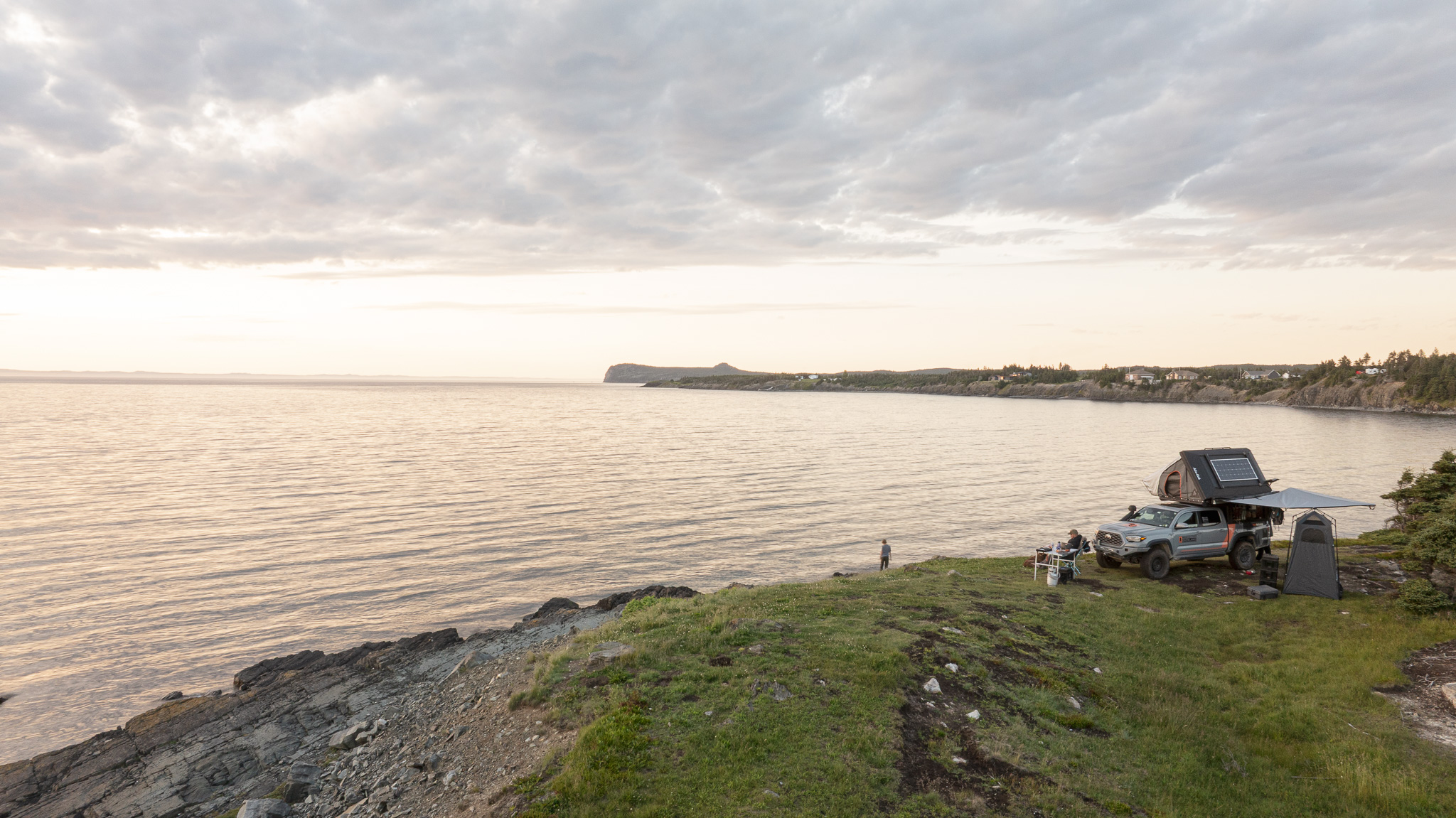 On the coast with dinner at sunset in Dildo, Newfoundland.
Our Alu-Cab Shadow Awning was particularly valuable in Newfoundland, where the weather could change quickly. When the rain was falling straight down, we could cook and spend time outside under the awning without getting soaked. It was equally useful for providing shade when the sun came out. During our Idaho trip, we barely used it, but that doesn't mean I'd consider leaving it behind. Some equipment earns its place because of how valuable it becomes when conditions change, even if you don't need it every day.
When the weather was especially windy and wet, we could adapt by having Stephanie and Ketcher spend time upstairs while I prepared food in the sheltered lower area of the truck. Having that flexibility was important because we weren't always camping somewhere with a picnic shelter or other facilities. Sometimes we were simply parked in a beautiful place with whatever protection the truck and camper could provide. Any cooking in that sheltered space requires careful attention to ventilation and stove safety, but the ability to use the camper in different ways made unpredictable weather much easier to manage.
One of my favorite memories from Newfoundland was cooking fresh fish that some locals had given us while whales spouted in the distance. We were right along the coast, preparing dinner and watching the ocean, with no restaurant reservations or elaborate plans. It's difficult to explain how special those moments can be until you've experienced them. The camper gave us the freedom to be there, but the experience itself had very little to do with the equipment.
The Less Glamorous Side of Extended Travel
Living out of a truck for weeks at a time isn't all coastal views and memorable dinners. There are showers to take, bathrooms to figure out, clothes to organize, and equipment that needs to be packed away every time you move. Those everyday details probably taught us more about what works than anything else, and living 51 days together as a family in an Alu-Cab camper gave us plenty of opportunities to refine our routines.
For our Newfoundland trip, we carried a separate shower tent, and I can say without hesitation that it was one of my least favorite pieces of equipment. Setting it up and taking it down became a chore, particularly when we were moving frequently. At the time, Alu-Cab hadn't developed a mounting solution for the Shower Cube that worked with our ModCAP setup, so we made do with what we had. By the time we headed to Idaho, we had installed the Alu-Cab Shower Cube, and it made an enormous difference. Being able to deploy a privacy enclosure quickly without unpacking a separate tent eliminated one of the more frustrating parts of our daily routine.
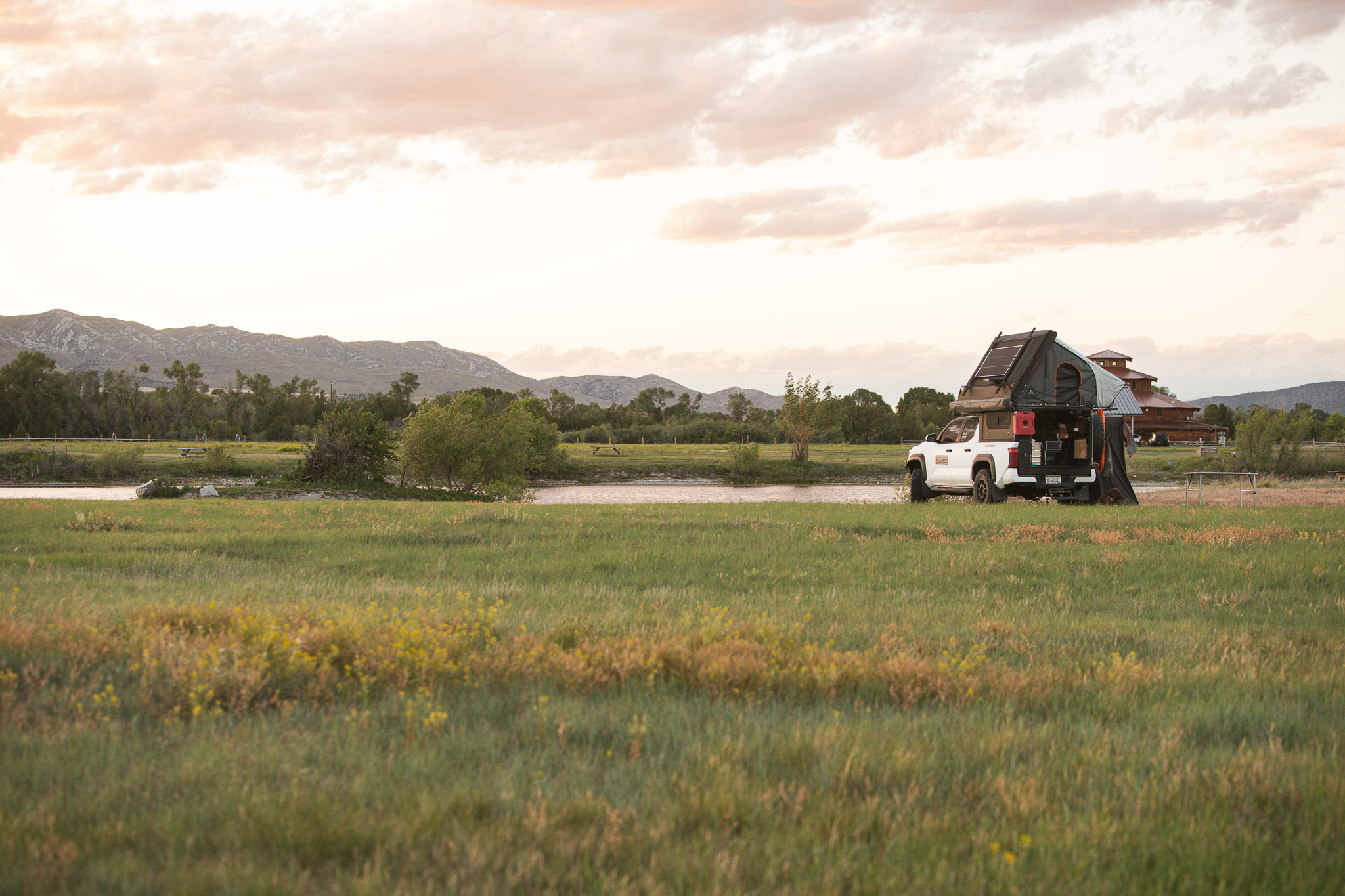 At the XOverland Ranch, our 2025 Tacoma pictured with the Alu-Cab Shower Cube open on the passenger side of the truck.
There is still one improvement I'd like to figure out. Deploying the Shower Cube requires opening the side window of the camper, which creates an opportunity for insects to get inside if you leave it open at night. I'd love to develop some type of screen that fits around the Shower Cube so we could leave it deployed without worrying about bugs. It's not a dealbreaker, but after enough nights on the road, those are the kinds of little refinements you start thinking about.
For most of our showers, we used a compact Geyser shower system connected to the water tank in the camper. We occasionally took advantage of campground showers, but having our own setup meant we weren't dependent on finding facilities every few days. In Newfoundland, we used a 12V water pump, and for Idaho, we switched to a USB-powered pump from Geyser. I really appreciate how compact the entire system is, especially considering how much storage space traditional shower equipment can consume.
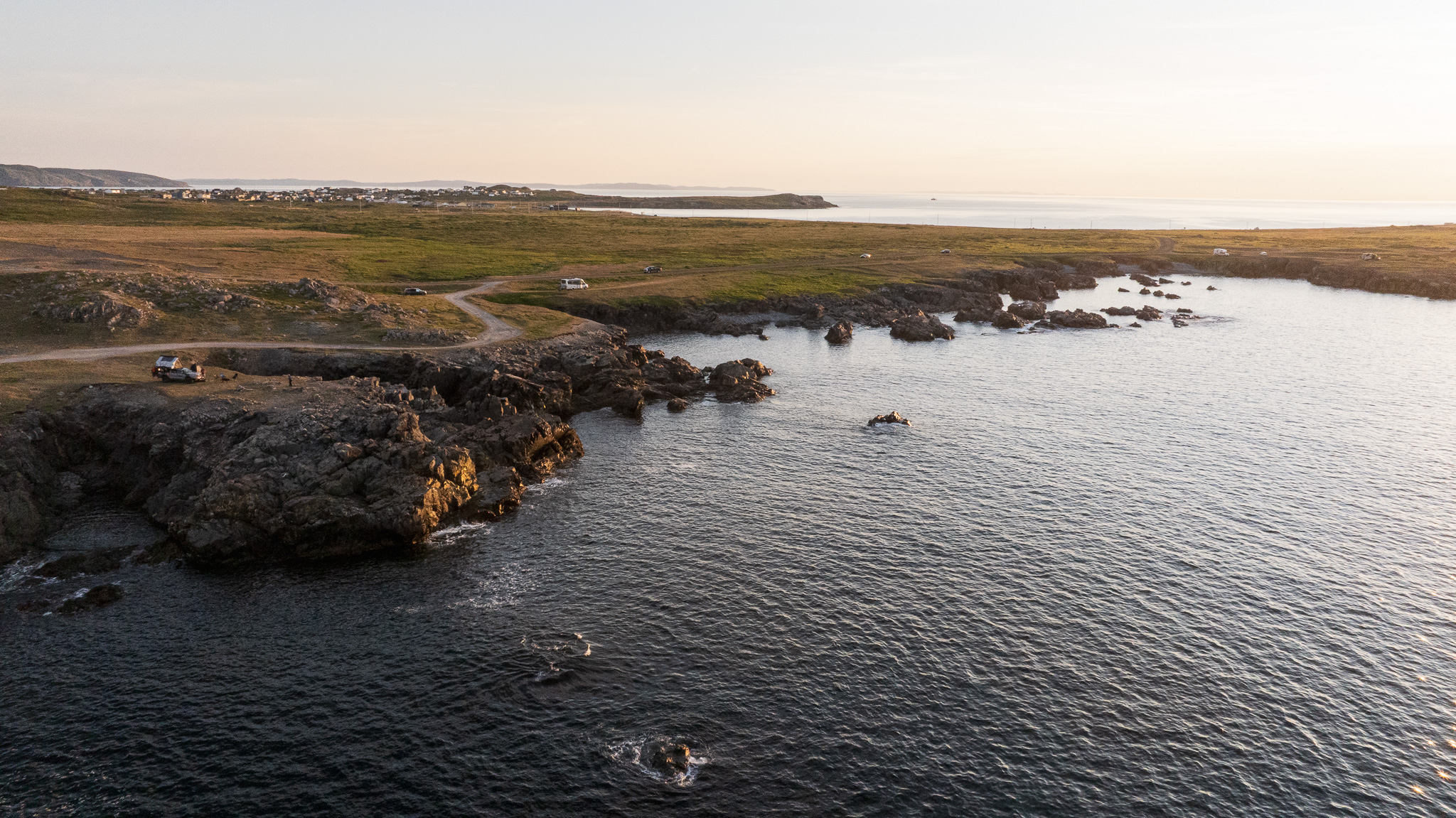 On the northern coast of Newfoundland with our prior shower tent setup.
We also carried a Wrappon PF-1 toilet, which turned out to be far more useful than I initially expected. We used it regularly, and during Newfoundland, we actually ran out of refills before the trip was over. That's one supply I'll make sure we carry more of next time. Eventually, we also became comfortable using the shelter of the truck for privacy when nature called at night. It's not necessarily something people think about when imagining an extended overland trip, but having practical solutions for those everyday needs makes traveling much more enjoyable.
Another small piece of equipment that earned a permanent place in our kit was our PackTowel ponchos. They're incredibly convenient when you're showering outdoors or in a public setting because you can dry off and change without worrying about privacy. They don't take up much room, and they're exactly the kind of simple, useful equipment that we've come to appreciate more than elaborate camping gadgets.
The Constant Evolution of Storage and Organization
If I had to identify the single biggest challenge of living out of the camper, it would be keeping everything organized. The sleeping area was comfortable, deploying the camper was easy, and we generally had enough room for everyone, but figuring out where to store all our equipment required constant attention, especially early in each trip.
For Newfoundland, we used a Goose Gear storage system in the Tacoma's bed. Our particular configuration consisted of cabinets rather than drawers, and while it provided dedicated storage space, we still found ourselves moving equipment around to reach the things we needed. Over the course of the trip, we adjusted how everything was packed based on our daily routine. Items that seemed important when we left home sometimes ended up buried in the back, while things we hadn't thought much about became essential to have within easy reach.
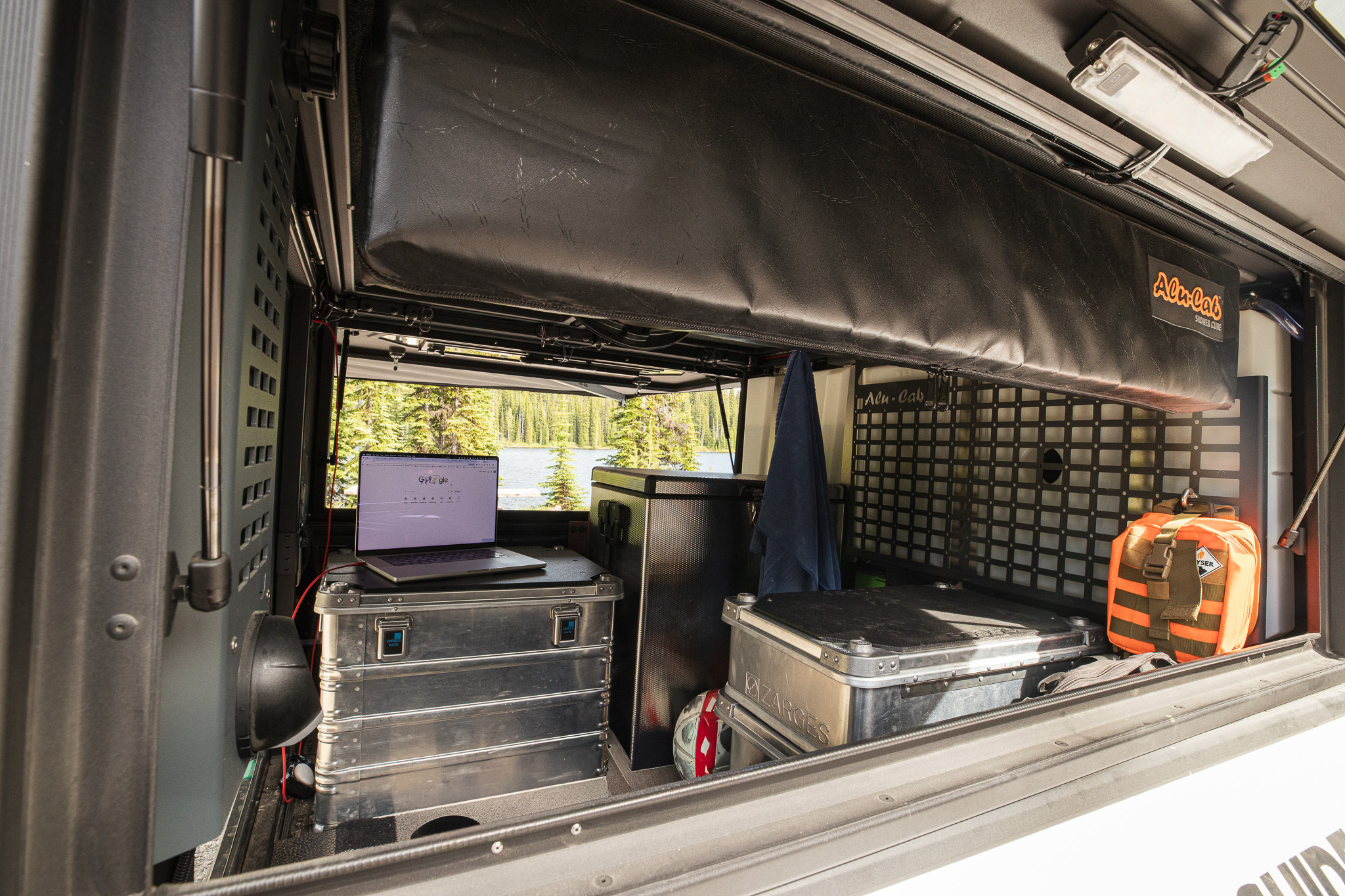 Our camper interior with Zarges cases installed as shown on our 2025 Tacoma.
Before heading west the following summer, we changed our approach and switched to Zarges aluminum storage cases. Personally, I prefer the flexibility of the Zarges system because the cases are independent, come in a variety of sizes, and can be arranged differently depending on what we're carrying. They're also designed to seal out water and dust, which is particularly useful when you're traveling through changing conditions. We appreciated having our food contained in well-sealed cases while traveling through bear country, although those seals aren't a substitute for approved bear-resistant storage where required.
Stephanie and Ketcher appreciate the convenience of drawer-based systems, and I can understand why. Drawers make it easier to access equipment without unpacking everything around it. Our Goose Gear setup didn't include drawers, so we weren't comparing the two approaches directly, but the experience reinforced how personal storage preferences can be. For me, the ability to rearrange individual cases was worth the tradeoff.
We also found that smaller organizational accessories made a surprisingly big difference. Blue Ridge Overland Gear pouches were useful for keeping little items together instead of letting them disappear into larger storage compartments. For clothing, I prefer packing cubes because I can separate everything by category, while Stephanie likes a more organized duffel bag approach. Neither is necessarily better, but having a consistent system for each person's belongings made it much easier to find things without turning the entire camper upside down.
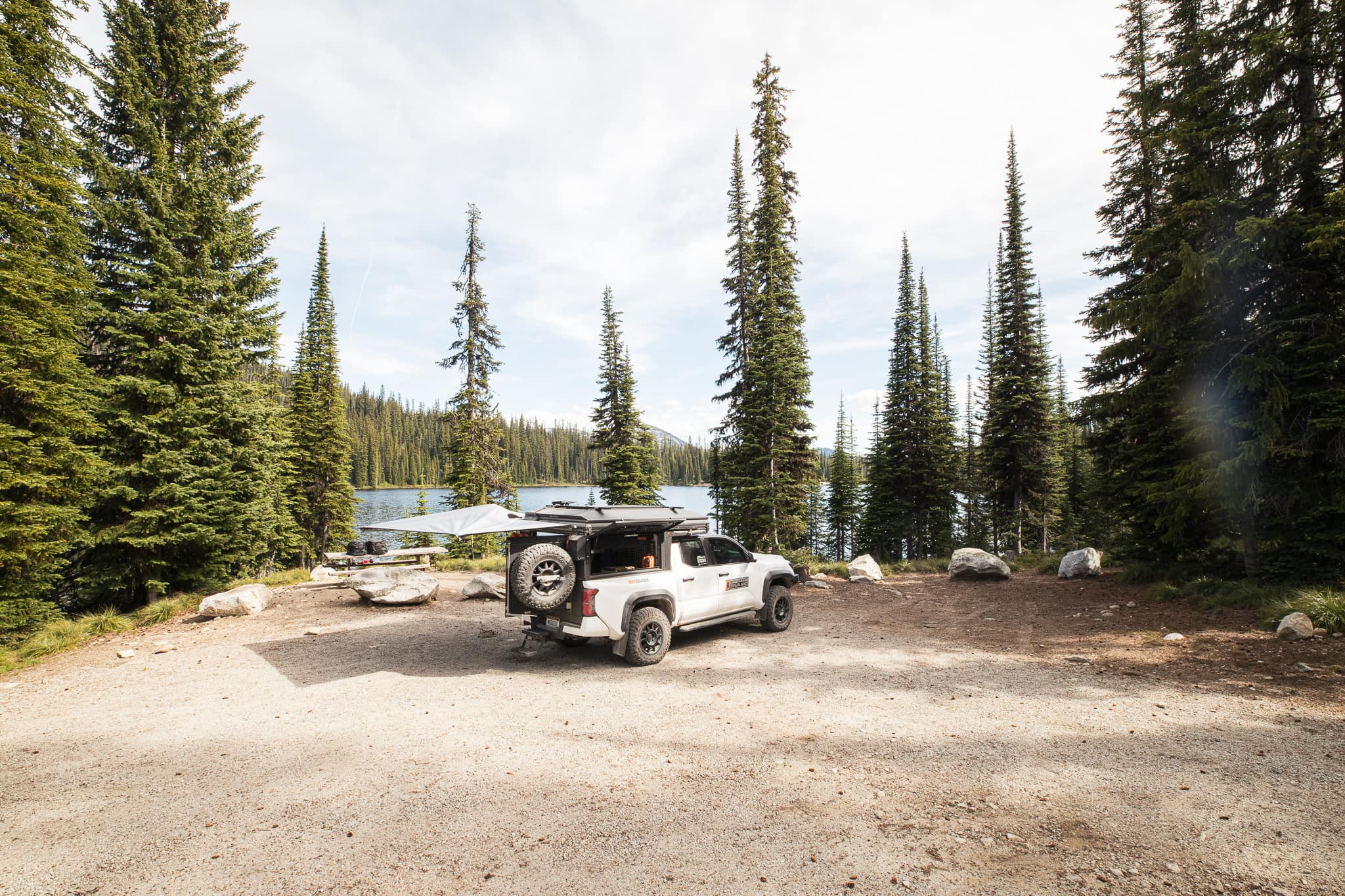 Reset day on an alpine lake in Idaho. We've learned that stopping every few days to pull everything out of the truck, cleaning and starting fresh makes our living space so much more comfortable.
By the time we settled into our routine, the storage challenges became much less frustrating. We knew where everything belonged, what needed to be accessible, and what could stay packed away until we reached camp. It's one of those things that's difficult to perfect before leaving home because you don't really know how you're going to use everything until you've spent a few weeks on the road.
Living 51 days together as a family in an Alu-Cab camper reinforced something I've learned from years of traveling: the best storage system isn't necessarily the most elaborate one. It's the one that allows you to find what you need without constantly moving everything else out of the way.
When Newfoundland Put the Camper to the Test
Of the two trips, Newfoundland was probably the better test of the camper's ability to handle difficult weather. The coastal environment brought wind, rain, and changing conditions that made us appreciate having a durable, well-built shelter.
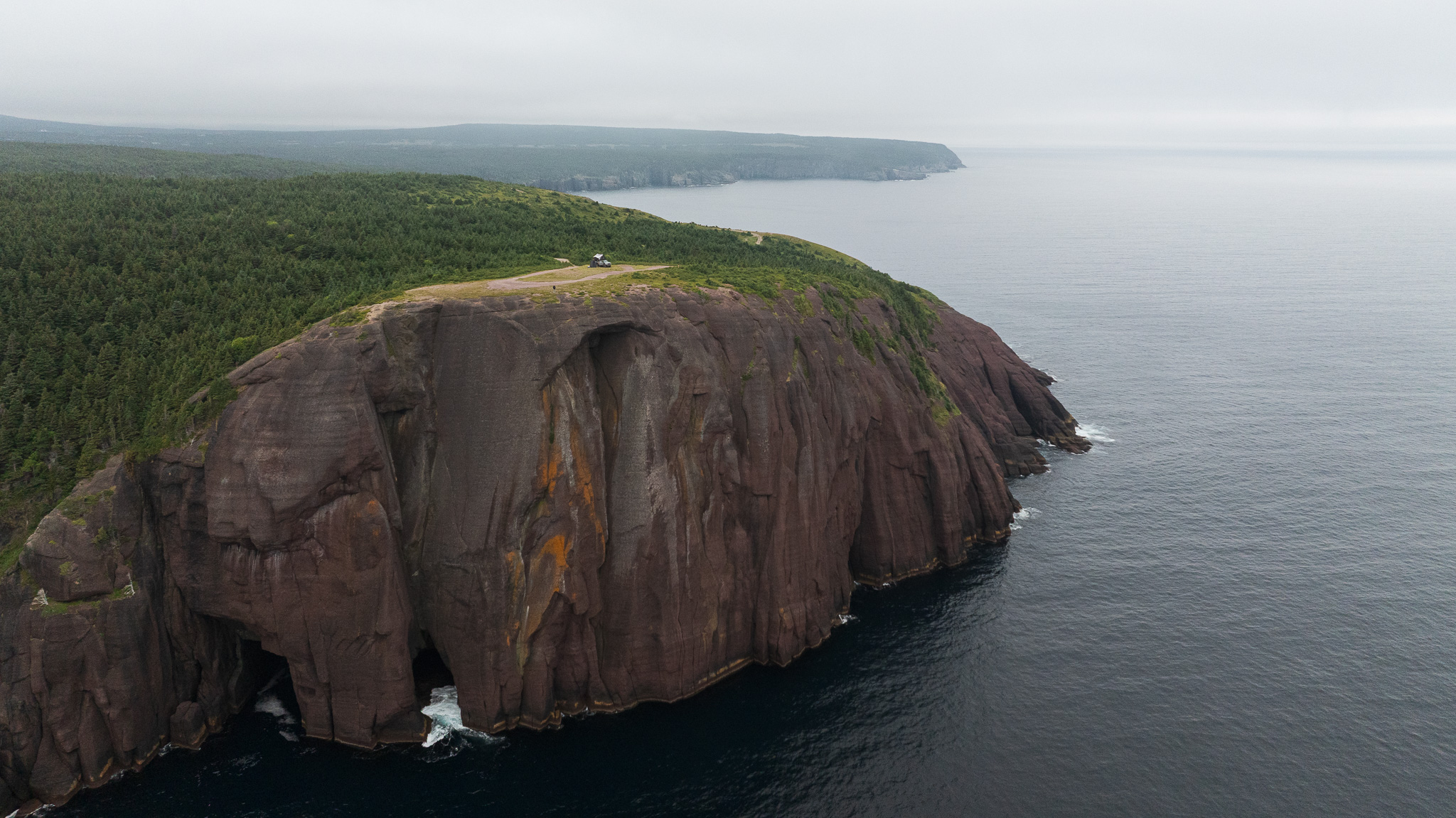
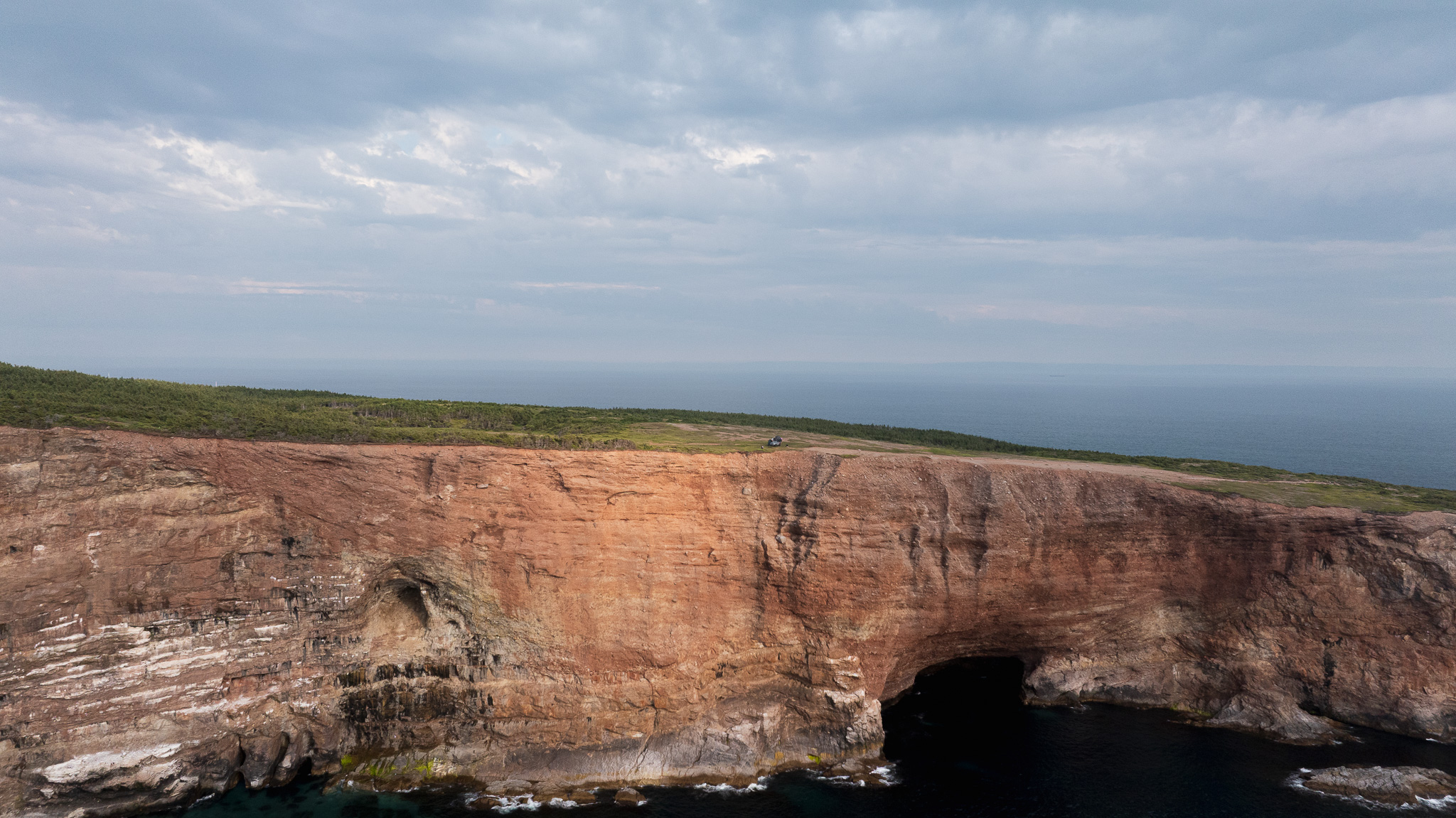 Battered by heavy winds and rain the night before, we woke up to this view the next morning in Newfoundland.
One night stands out in particular. We were camped on a cliff overlooking the coast when the wind picked up and the rain settled in. We experienced steady winds around 30–40 mph, and the tent fabric was flapping enough that we decided to use shock cord to secure the rainfly closer to the sides of the camper. That helped reduce some of the movement and noise, although it was still a pretty wild night.
What impressed me was how well the camper kept the weather outside. Despite the constant rain and strong wind, everything inside stayed dry. We were comfortable enough to sleep through the conditions, and when morning came, we were rewarded with an incredible view of the coastline. I wouldn't suggest that anyone deliberately camp on an exposed cliff during dangerous weather, but that experience gave me a lot of confidence in the ModCAP's construction and weather resistance.
The durability also mattered when we were traveling through dense trails. We weren't particularly concerned about brushing past vegetation or taking the truck into places where a more delicate camper might have made us hesitate. The combination of a durable camper and a capable midsize truck meant we could continue exploring without constantly worrying about the equipment mounted on the back.
Two Tacomas and a Better Understanding of Power
Between Newfoundland and Idaho, the biggest change to our setup was the truck itself. We moved the ModCAP from our 2020 Toyota Tacoma to a new 2025 Tacoma, both with short beds. The newer truck brought noticeable improvements in drivability and power, which we appreciated during our travels across the western United States. The camper remained essentially the same, although we made a few changes to storage, shower equipment, and electrical capacity based on what we'd learned during the first trip.
Our electrical system used solutions from REDARC and GP Factor, and overall, managing power was straightforward. The system was thoughtfully arranged, so switching accessories on and off and keeping track of what we were using didn't require much effort. But Newfoundland taught us that even a good electrical system can run into limitations when the weather and travel schedule don't cooperate.
We had several consecutive days without much sunshine, and because we weren't driving very far, we weren't replenishing the battery through the truck's charging system either. Eventually, we ran out of power. It wasn't enough to ruin the trip, but it showed us that we needed more capacity if we wanted to spend extended periods in one place without worrying about how much electricity we were using.
Before Idaho, we upgraded to an Expion360 240Ah battery, and that change made a noticeable difference. During our three-week trip, we never had another issue with running out of power. It's a good example of how a setup evolves through actual use. You can spend plenty of time planning an electrical system on paper, but a few cloudy days in Newfoundland will tell you pretty quickly whether you've got enough battery capacity.
One thing that became clear living 51 days together as a family in an Alu-Cab camper was how important it is to build your electrical system around the way you actually travel. If you're moving every day, charging from the truck may be enough to keep up with your needs. But if you spend several days exploring one area without driving much, additional battery capacity becomes much more valuable.
The Freedom of a Midsize Truck
One of the biggest advantages of our setup is something that's easy to overlook when comparing camper features: the truck itself remains relatively compact and capable.
During Newfoundland, we often found ourselves in places where larger motorhomes and RVs simply couldn't go. At one campground, rather than parking alongside a row of recreational vehicles, we were able to position our Tacoma up on a hill overlooking the coast. We had an incredible view and a campsite that felt much more connected to the landscape around us.
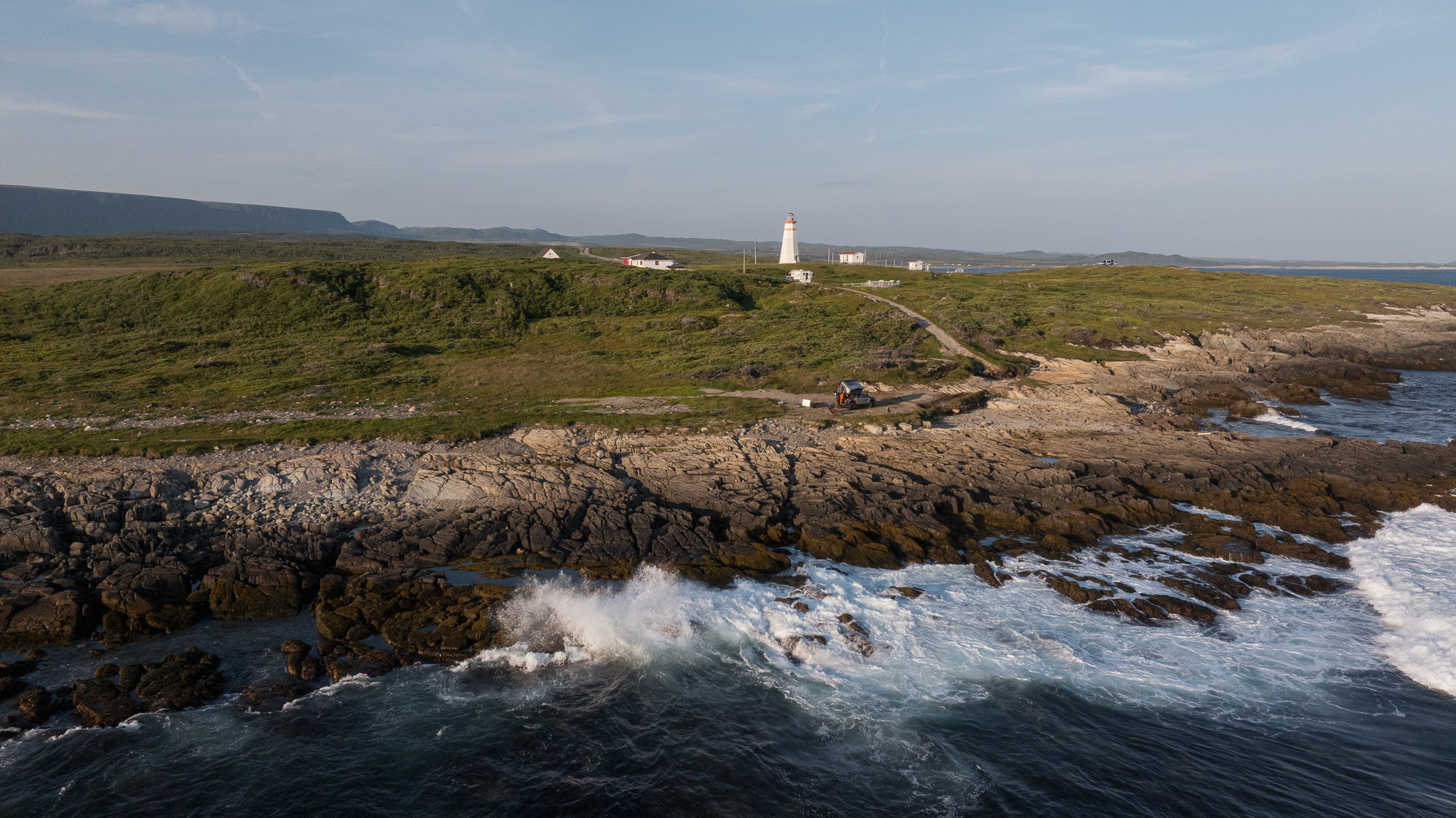 When it's a bit too rugged for a Sprinter and just perfect for a mid-size truck with a camper in the back, you can get to spots like this.
Those are the experiences that make this style of travel so appealing to me. We can spend the day exploring remote roads, pull into a campground when we want facilities, or find a more secluded place to spend the night where camping is permitted. We're not limited to large parking areas or established RV sites, and we don't have to worry as much about whether a road will accommodate a much larger vehicle.
Interestingly, some of the people most intrigued by our camper were traveling in Sprinter vans and motorhomes. We regularly met people who had considerably more amenities than we did, yet they were fascinated by the simplicity of the ModCAP. I think they appreciated the idea of having a comfortable place to sleep without carrying an entire house along for the ride.
That simplicity is a big part of what makes the camper work for us. Opening or closing it takes only a couple of minutes without rushing, and we don't have to remove all our bedding before packing up. We just fold everything neatly into the wedge area, close the roof, and get moving. After enough days of traveling, that process becomes as routine as making coffee in the morning.
Learning What We Actually Need
While living 51 days together as a family in an Alu-Cab camper, one of the clearest lessons is that we don't need nearly as much equipment as we sometimes think.
On our first trip, we brought three camp chairs and only ever used two. We packed a Dutch oven that seemed like a good idea when we were planning the trip, but it never really justified the space it occupied, so we left it home for Idaho. I could probably say the same about the separate Jetboil I brought for coffee. It's a great piece of equipment, but when you're already carrying a cook stove, sometimes having two ways to accomplish the same task just means you're carrying more stuff.
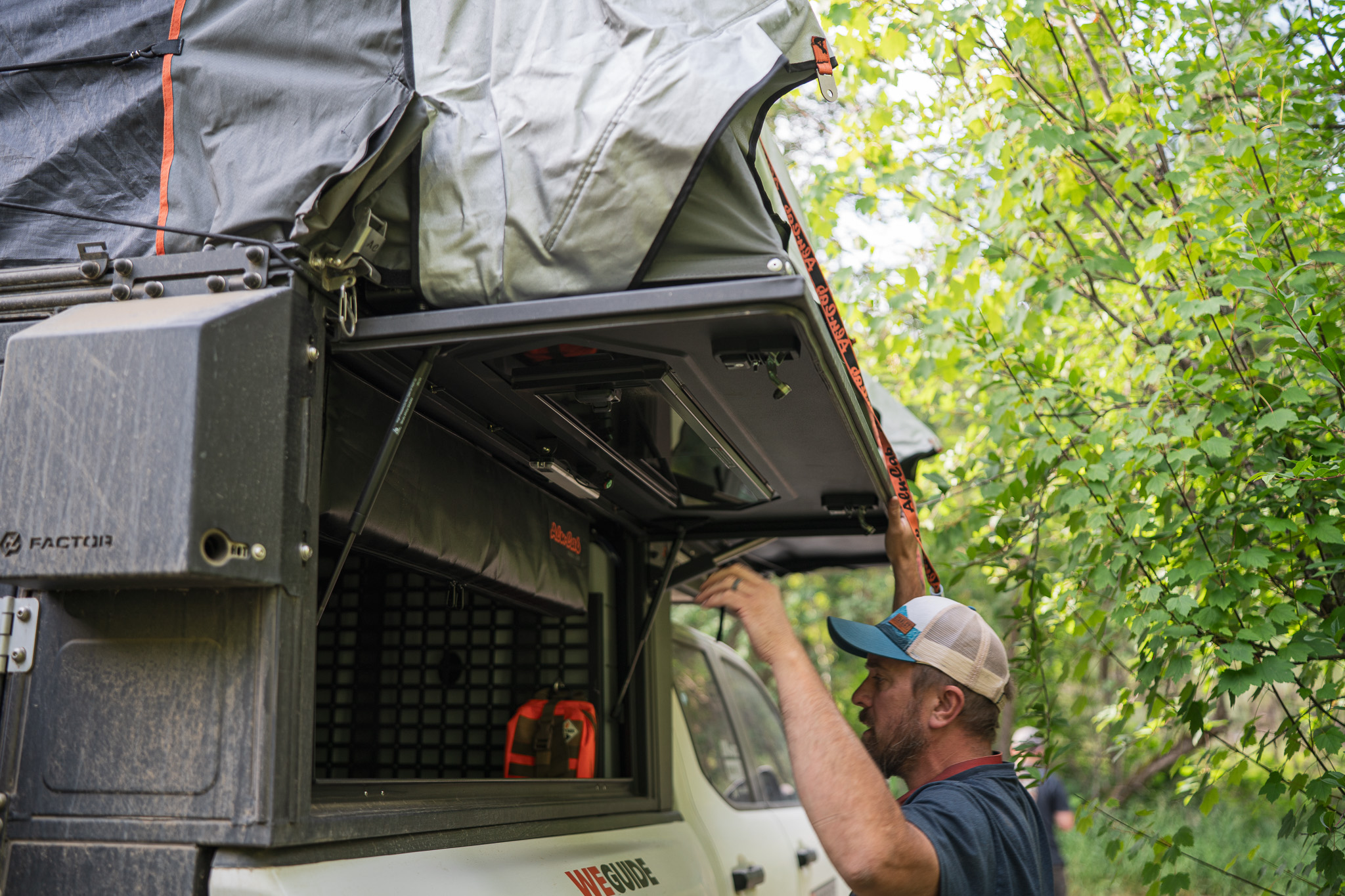 Access to the Alu-Cab Family Camper from the passenger side. Here you can see the Shower Cube collapsed and zipped up.
Over time, we've become much more selective about the little gadgets and accessories we bring along. There are plenty of clever camping products out there, but a lot of them don't serve much purpose once you're actually living on the road. I'd rather have a smaller collection of equipment that gets used regularly than spend every morning digging through things we thought we might need.
That doesn't mean we leave all the extra equipment behind. Our recovery gear never came out during either trip, but I'll never travel remote roads without it. The same goes for our awning, which saw heavy use in Newfoundland and very little in Idaho. Some equipment is worth carrying because of what it allows you to do or the problems it can solve when conditions change.
We've also learned to appreciate equipment that simplifies everyday tasks. The Alu-Cab Shower Cube, compact Geyser shower system, Wrappon toilet, PackTowl ponchos, and organizational pouches all earned their place because they made daily life easier. None of them is particularly glamorous, but when you're traveling for weeks at a time, convenience becomes much more valuable than novelty.
What to Consider When Choosing a Family Camper
After spending 51 days in an Alu-Cab Camper, I've learned that choosing the right truck camper for my family isn't necessarily about finding the one with the most features. It's about finding something that works for the way your family actually travels. Whether you're planning weekend camping trips or spending weeks exploring remote roads, here are a few things I'd consider before making the investment.
- Sleeping space for everyone: Make sure there's enough room for the entire family to sleep comfortably, including kids who are getting bigger and any four-legged family members traveling along.
- Ease of setup and breakdown: If you're moving campsites frequently, a camper that opens and closes in just a few minutes makes a huge difference. Being able to leave your bedding in place is an added bonus.
- Access to the camper: Think about how you'll get in and out throughout the day. A rear entry door that doesn't require climbing over a tailgate is incredibly convenient.
- Durability and weather protection: Consider where you plan to travel and the conditions you might encounter. A camper designed to handle rough roads, wind, and rain is especially valuable for extended overland adventures.
- Storage and organization: Look beyond how much equipment a camper can hold and consider how easily you can access it. Cabinets, drawers, and removable storage cases all have advantages depending on your preferences.
- Electrical power and water: Think about how long you want to stay off-grid. Battery capacity, charging options, water storage, and shower solutions can make a big difference when you're away from campgrounds.
- Vehicle size and capability: A larger camper might offer more amenities, but it can also limit where you travel. Consider the camper's weight, your truck's payload capacity, and the types of roads you want to explore.
- How you actually spend your time: If you enjoy cooking outdoors, hiking, and exploring, you may not need a camper with a full indoor kitchen or bathroom. Prioritize the features you'll use every day rather than the ones that simply look appealing.
For our family, the ModCAP Family Camper checked the boxes that mattered most. We wanted something durable, comfortable, and easy to use without sacrificing the ability to explore remote places in our Toyota Tacoma. After two summers on the road, I feel even more confident that we made the right choice.
What 51 Days Together Taught Our Family
People sometimes ask whether we ever felt cramped or needed a break from each other after spending so much time together in a relatively small camper. The answer might surprise them, because honestly, we never really did.
If anything, I feel like these trips brought us closer together as a family. We spent our days exploring, cooking, hiking, traveling, and sharing experiences that were completely different from our normal routines at home. Sure, we occasionally disagreed about something, but there wasn't much room or time to stay upset. We'd get over it pretty quickly and move on to whatever adventure was waiting for us. That's one of the things I love most about my family.
Ketcher has always enjoyed traveling, and watching him experience these places has been one of the most rewarding parts of both trips. He's 12, so naturally there are times when a long, boring drive means some device time. I'm not going to pretend otherwise. But Stephanie and Ketcher hiked nearly every day, and even though I spent much of the trips working remotely, I made sure to set aside time for us to explore together.
There were places we visited that Ketcher absolutely loved, and I think about how fortunate he is to have experienced them at his age. He doesn't have to sit around wondering what Newfoundland looks like or what it's like to explore the mountains of Idaho. He's been there, walked those trails, and made his own memories in those places.
If there's one thing I'll living 51 days together as a family in an Alu-Cab camper, it won't be the equipment or the miles we traveled. It'll be the time we spent together and the places we were able to experience as a family. For me, that's worth more than just about anything we could have purchased or brought along on the trip.
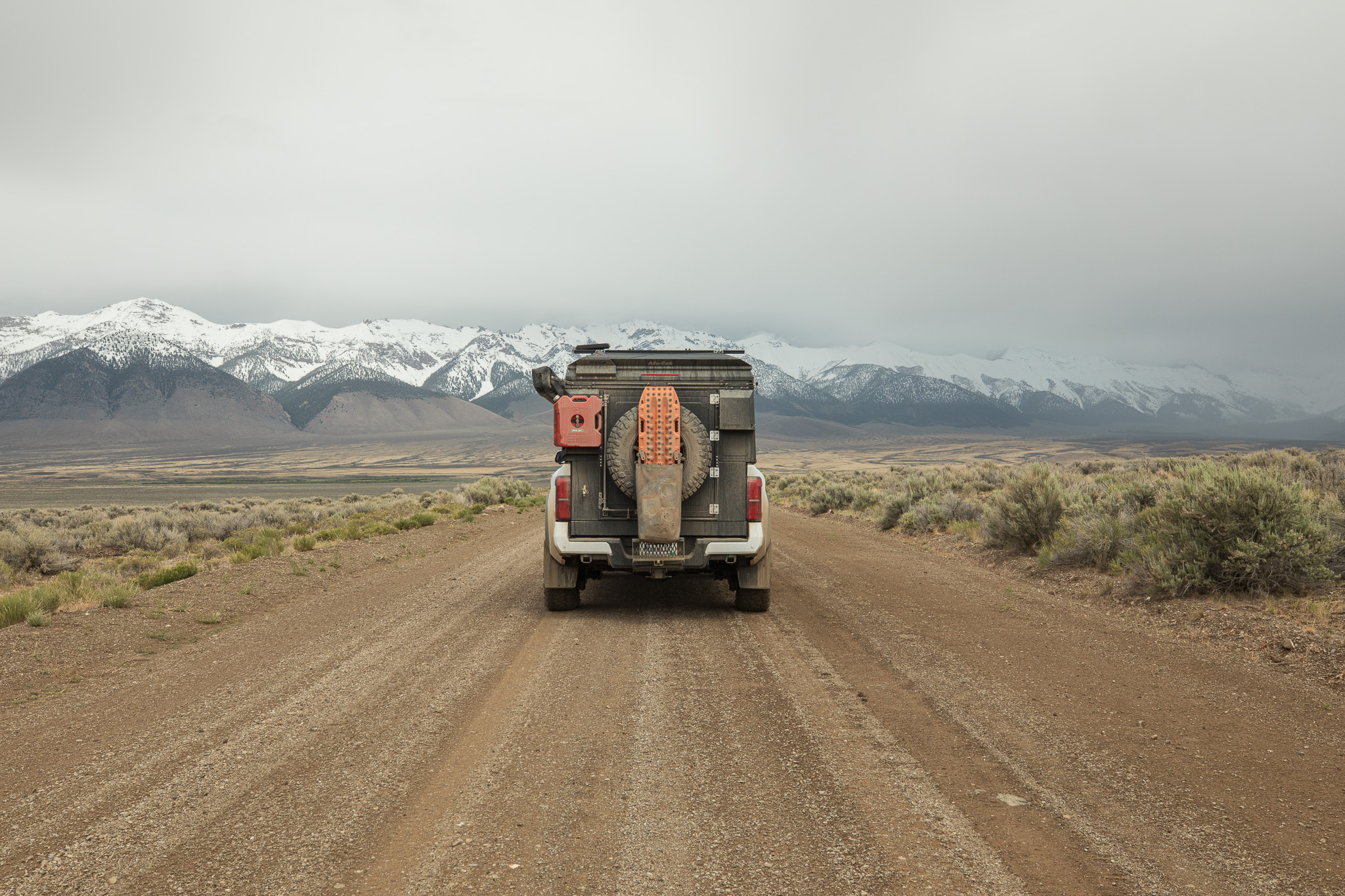 Some very deserted road north of Copper Basin, Idaho.
Would We Choose the ModCAP Again?
There are a lot of camper options available today, and I don't think there's one perfect solution for everybody. There are lighter, less expensive campers that I'm sure are excellent choices, particularly for people who primarily take weekend trips or stay in established campgrounds. But for the kind of traveling we enjoy, I really appreciate what Alu-Cab has built.
I think of the ModCAP Family as an extended-adventure camper. It's designed for the kind of travel where you might not know exactly where you'll end up at the end of the day, what the roads will be like, or what kind of weather you'll encounter along the way. Its durability, usable sleeping space, and straightforward operation make it particularly well suited to moving from place to place without constantly reorganizing your entire setup. The ability to leave our bedding upstairs, close the camper in a couple of minutes, and continue down the road is something I wouldn't want to give up. Neither is the rear entry door, which makes getting in and out so much easier than climbing over a tailgate.
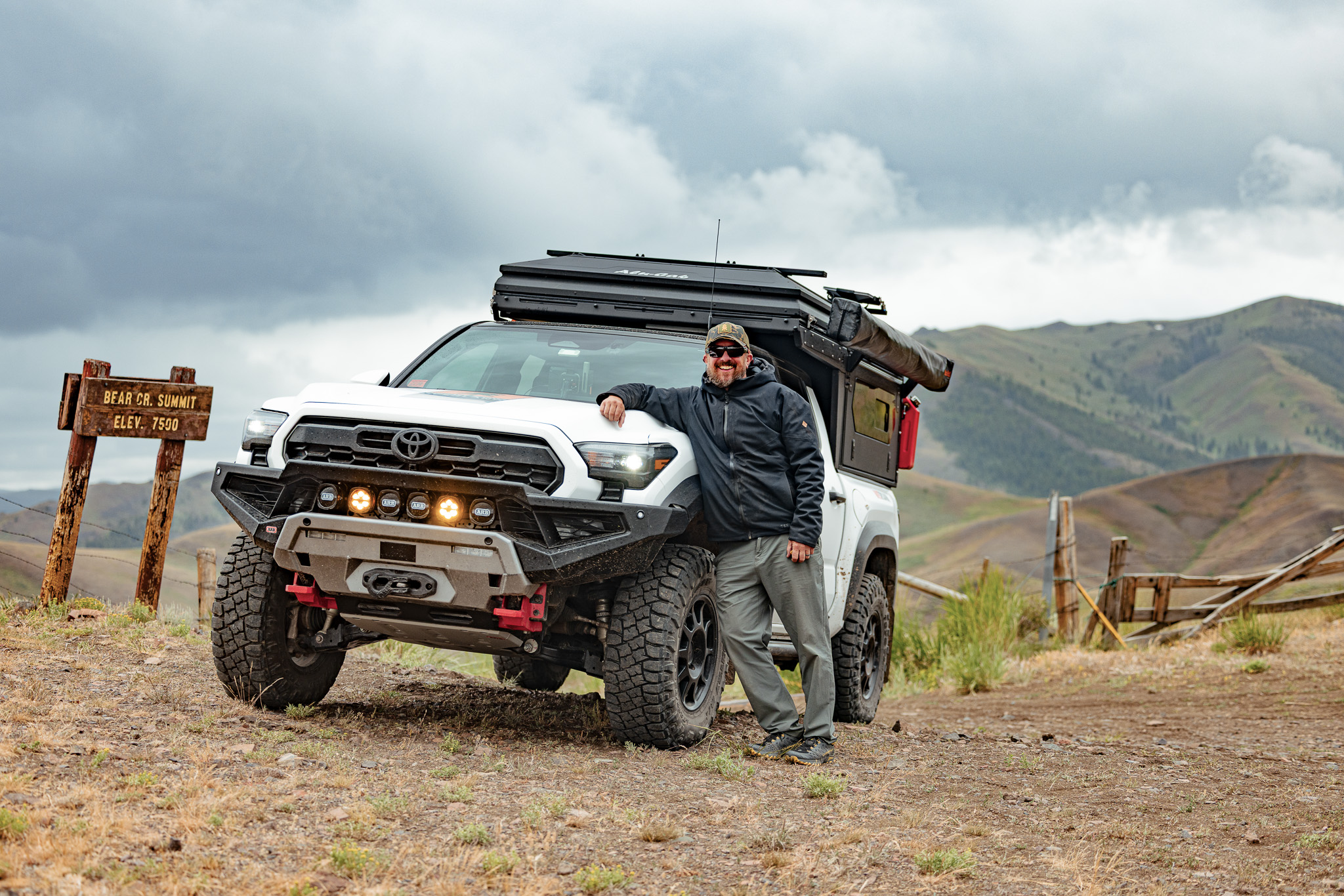 Jason (author) pictured with their complete 2025 Tacoma build on the Bear Creek Summit in Idaho.
Looking back at traveling 51 days together as a family in an Alu-Cab camper, what stands out most isn't necessarily the equipment or the modifications we made between trips. It's how comfortable we became living this way and how much we enjoyed experiencing these places together. We've refined our storage, upgraded our electrical system, figured out which equipment deserves space in the truck, and developed a routine that works for our family. More importantly, we've discovered that we genuinely enjoy spending weeks on the road together without feeling like we're sacrificing anything important.
I love our camper, but what I love even more is what it allows us to do as a family. We've spent mornings waking up above the Newfoundland coast, evenings preparing dinner while watching whales offshore, and days exploring places across the American West that we'd previously only seen in photographs. Ketcher has experienced places that many people spend their lives dreaming about visiting, and Stephanie and I have been able to share those experiences with him. We haven't needed a large motorhome or every convenience of home to make those memories. We've just needed a capable truck, a comfortable place to sleep, and the willingness to see what's around the next corner.
As for where we're headed next, Baja is definitely on the list. Actually, I know it's on the list. We just need to figure out how to make it happen because it's a long drive, and I really want to take my own truck rather than rent something once we get there. After two summers and thousands of miles, I wouldn't change much about our setup, and I certainly wouldn't trade the experiences we've had together. At this point, I'm not thinking about what camper I'd rather have. I'm thinking about where we're going to take this one next.
FAQs
1. Can a family of three and a dog comfortably sleep in an Alu-Cab ModCAP Family Camper?
Yes. We spent 51 days in an Alu-Cab Camper with two adults, our 12-year-old son, and a 90-pound Chesapeake Bay Retriever. The ModCAP Family Camper provided enough sleeping space for everyone, with our son sleeping on the overhang and our dog between us. The upper sleeping area is spacious, comfortable, and dark when the windows are zipped closed. We also appreciated being able to leave our bedding upstairs when packing up for the day.
2. Is the Alu-Cab ModCAP Family Camper suitable for extended overland trips?
Absolutely. After spending 30 days exploring Newfoundland and another three weeks traveling through South Dakota, Montana, and Idaho, we found the ModCAP Family Camper particularly well suited for extended adventures. Its durable construction, quick setup, spacious sleeping area, and convenient rear entry door made it easy to travel from one destination to another. It's especially appealing for travelers who want to explore remote roads without giving up the capability of a midsize 4WD truck.
3. How does the Alu-Cab ModCAP Family Camper perform in bad weather?
Our ModCAP Family Camper handled some challenging weather during our Newfoundland trip, including a night of sustained 30–40 mph winds and constant rain along the coast. Despite the conditions, the camper remained dry inside and provided a comfortable place to sleep. We used shock cord to reduce rainfly movement in the wind. The Alu-Cab Shadow Awning was also extremely useful for providing shelter from rain during outdoor cooking and everyday camp activities.
4. What equipment is essential for living in an Alu-Cab Camper for several weeks?
After 51 days of traveling, we learned that organization and reliable everyday equipment matter more than carrying lots of camping gadgets. Our most useful gear included a cook stove, Alu-Cab Shadow Awning, Alu-Cab Shower Cube, Geyser shower system, Wrappon PF-1 toilet, PackTowl ponchos, and Blue Ridge Overland Gear storage pouches. We also relied on REDARC and GP Factor electrical solutions, upgrading to an Expion360 240Ah battery before our second trip. Recovery equipment remained essential to carry, even though we never needed to use it.
5. What are the biggest advantages of an Alu-Cab Camper compared to a traditional RV or camper van?
For our family, the biggest advantage was maintaining the freedom and off-road capability of our Toyota Tacoma while having a comfortable place to sleep. Unlike larger RVs and camper vans, our midsize truck could access more remote roads and smaller campsites, including locations overlooking the Newfoundland coast. The ModCAP Family Camper also allowed us to leave our bedding in place, pack up in just a couple of minutes, and travel without constantly rearranging our living space. For families interested in extended overland adventures, that combination of convenience, durability, and mobility is difficult to beat.