What is TPMS?
In this article, we will go over:
- What is TPMS?
- Indirect vs. Direct TPMS
- Why is the TPMS important to safety?
- What should I do if my TPMS light goes off?
- What psi should my tires be at?


What is TPMS?
TPMS (Tire Pressure Monitoring System) is a federally mandated system that illuminates when your tires are beyond the threshold of what the vehicle manufacturer allows for that vehicle. Every vehicle newer than 2008 must have this system installed by car manufacturers.
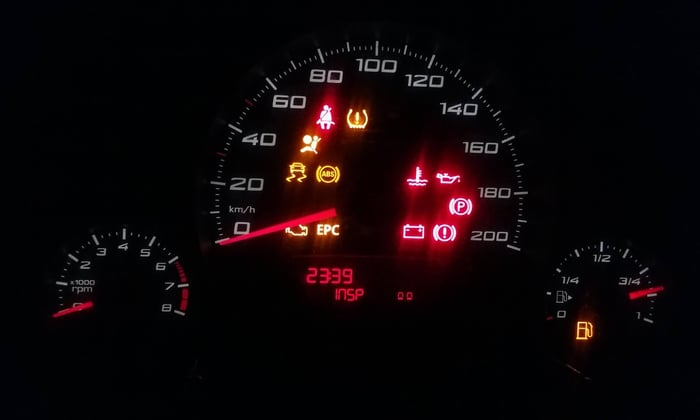
TPMS, or Tire Pressure Monitoring System, is an electric system within your vehicle that is responsible for monitoring the air pressure in your car's pneumatic tires. Depending on the vehicle, this system relays tire pressure in real-time to the operator via gauge, pictogram display, or a simple TPMS warning light. The TPMS warning light is typically located in the gauge cluster on your vehicle's dashboard.
Indirect vs. Direct TPMS
Direct TPMS collects accurate pressure information directly from the tire valve via four dedicated sensors. This system reports pressure information in near real time. On the other hand, indirect TPMS does not use tire valve sensors and determines tire pressure through software-based systems, such as the ABS system(Anti-Lock Braking System), to approximate tire pressure. Unlike a direct systems, which relays tire pressure in near real time, motorists must drive a substantial distance before an alert will be generated with an indirect TPMS.
Direct TPMS is often preferred over indirect systems because these systems do not have to be re-calibrated by the driver after tire pressure is modified or a tire is changed. You can find out how to reset your TPMS system [link to article].
Why is the TPMS important to safety?
Driving with low tire pressure on road at high speeds can be very dangerous. Deflated tires alter your car's steering ability and can cause you to lose control of your vehicle. The likelihood of tire failure or blowout also increases due to greater flexion in the sidewalls, which leads to heat buildup. If overheating gets severe, a part of the rubber can separate from the internal structure or carcass of the tire, which results in a blowout and potential accident. Besides life endangerment, low tire pressure on road also diminishes your fuel economy and increases your tire wear.
However, if air down your tires to go off-roading, your TPMS light will be illuminated. This is not an issue if you air down and are going at slow speeds off-road.
What should I do if my TPMS light goes off?
If your TPMS (Tire Pressure Monitoring System) warning light illuminates when driving on road, you should stop driving and investigate as soon as you can. This warning light is typically located in the gauge cluster on your vehicle dashboard and indicates that one or more of your tires is not within the recommended manufacturer tire pressure range; they are either under-under-inflated or over-inflated.
If you are on a highway and your TMPS light illuminates but cannot find a safe area to pull off, turn on your hazard lights and drive below the specified speed limit (do not exceed the specified speed limit when TPMS warning light is on for reasons listed above) until you arrive to a safe location, such as a rest stop, to check your tires.
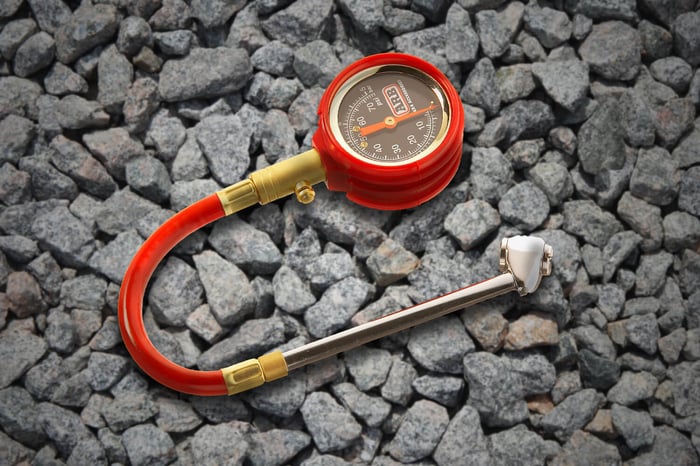
When safely stopped, you can check your tires' pressure with a tire gauge, as well as inspect them for damages if a flat is suspected. After inspection, if you discover that one or more of your tires are running low, you can inflate your tires using air pumps located at gas stations and or contact a service organization, like AAA, who can remotely service your tires or tow your vehicle if needed. You can also inflate your tires with an on-board or portable air compressor [link to article and air compressors], which makes this mechanical issue a breeze to correct.
What is PSI should my tires be at?
Manufacturer information on correct tire pressure, tire size, and towing capacity, on any vehicle, can be found in the driver's side door jam on the Tire and Loading Information Label. For example, the vehicle pictured below is specified by the manufacturer to run P225/60R17 front and rear tires with 30/29 psi for front and rear, respectively.
Sometimes this placard, can also be found attached on the glove door or inside of the trunk lid. You can also find the recommended tire pressure and load limit for your vehicle in the vehicle owner's manual.

We want to hear from you!
Have any questions regarding your TPMS? Send them our way!