There are two things you never want to penny pinch on: tires and brakes. Despite tire replacement being one of the most essential services on a vehicle, and tires being an important off-roading tool, knowing what you need for both your vehicle and your plans can be extremely difficult. There are a few things that are important to be aware of while tire shopping: the terrain type, the ply, the type of tread, and the quality of the brand itself.
Terrain Types
The terrain types you will find on a tire are winter, all-season, all-terrain, mud-terrain, and road standard.
Winter
Winter tires are characterized by increased sipes and a softer makeup, adding traction or “grip” while driving. While shopping for a winter tire, make sure it displays the “Three-Peak Mountain Snowflake,” which means that it has passed a specific winter traction test. Some states and areas require vehicles driving in hazardous conditions to have the Three-Peak Mountain Snowflake on their tire or receive fines.
Winter tires should always be replaced before warmer weather, as their softer composition, which makes them ideal in winter conditions, becomes significantly louder and quicker to wear once the weather is steadily above 45℉.

All-Season/All-Terrain
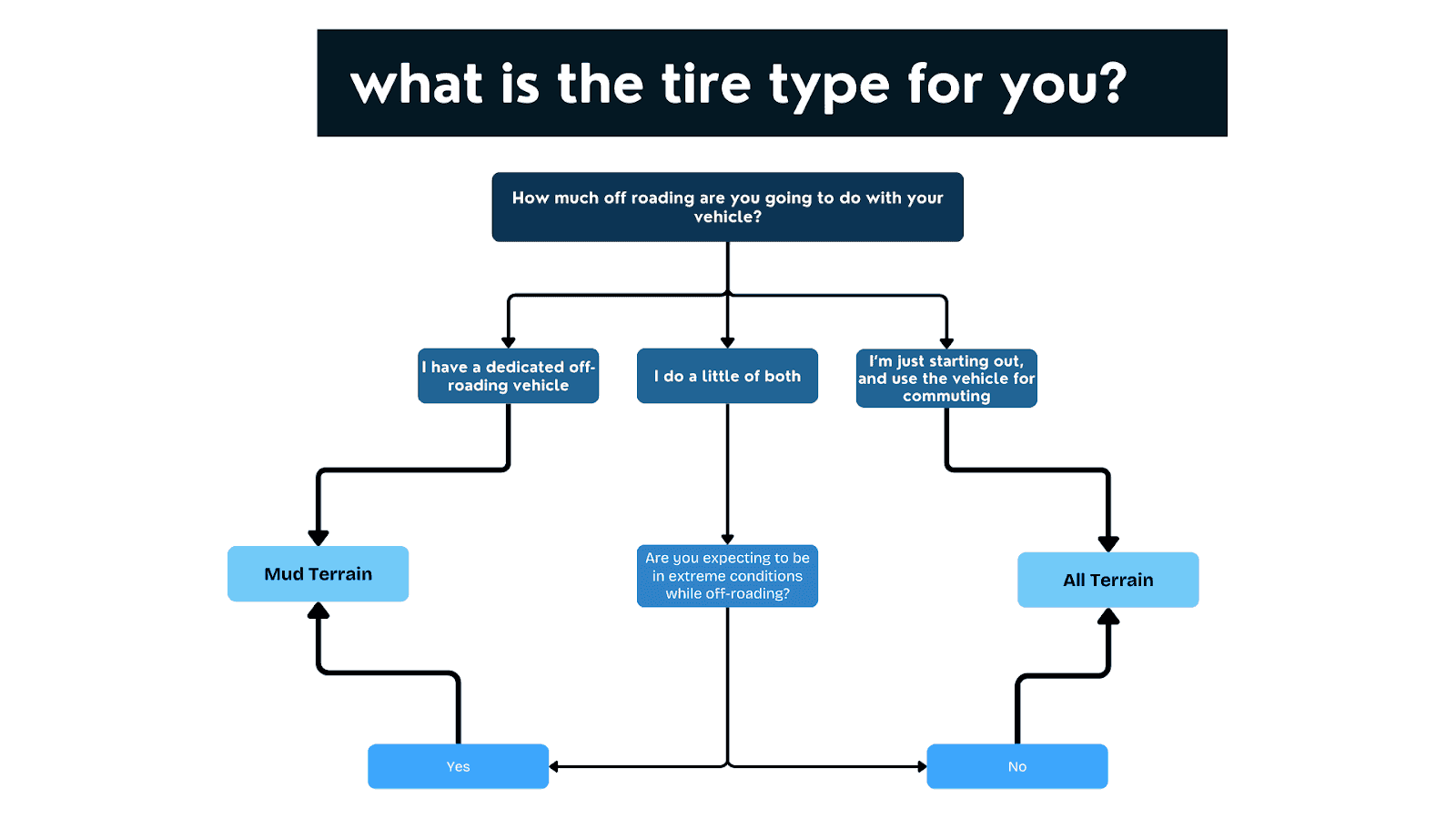
All-season tires work as an in-between for winter and mud-terrain. They are rated for both mud and snow and have an M+S symbol on their sidewall. While quieter on roads due to the smaller tread gaps, they are less effective in snowy conditions. The firmer makeup makes them slower to wear in warmer weather than a winter tire.
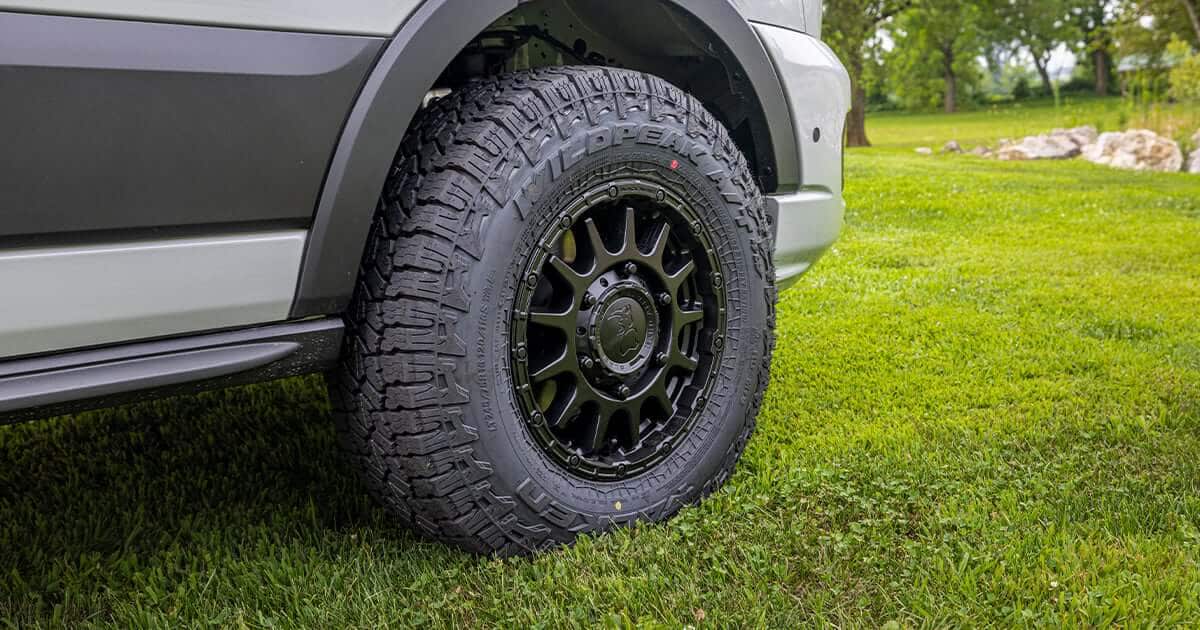
Like all-season, all-terrain tires are the in-between of mud-terrain and a road tire. All-season tires are the best for a beginner or casual overlanders and off-roaders. They are significantly quieter and last longer for highway driving, while still providing good traction off-roading in snow, ice, sand, and rock. While they struggle in more extreme conditions, they are still well-suited to off-roading and highway driving.
Mud-terrain
Mud-terrain tires are the go-to choice for the dedicated overlander and off-roader. They offer the best traction in extreme conditions such as large amounts of mud, rocks, ice, and other rugged terrain, due to the large gaps between tread blocks. The drawback is that they are extremely loud from the large tread gaps and wear significantly faster than others when driving on standard roads. If you have a dedicated off-roading vehicle or do large amounts of overlanding, then mud-terrain is the best choice. On anything doing significant highway commuting, they run the risk of uneven wear, increased noise, and short life spans.
Other Things To Look Out For
While shopping for tire brands, there are other things to look out for. One thing that is important to know is the mileage warranty (if there even is one) and how that warranty is compared to other brands. Another useful thing to consult is the Uniform Tire Quality Grade (UTQG system) to compare treadwear, traction, and temperature resistance.
Another factor to consider is the ply of the tire you are purchasing. While higher ply gives larger feedback and a rougher ride, they also have a higher speed or load index. Some tires also have a three-ply sidewall, making them more durable for off-roading. Oftentimes, all-terrain and mud-terrain contain this feature.
Finally, there are distinct features to more expensive brands that often make them worth the increased price. Michelin, for example, uses complicated construction and molds to be able to lay their tire belts diagonally, increasing the sidewall's ride. Another factor that drives up the price is the full-depth sipes. Sipes are the ridges within the tire tracks that increase traction; however, they do increase heat at braking or high speeds. The full-depth sipes add to the longevity and performance, maintaining their performance on the same level throughout the tire's life. The molds to make this feature are expensive and require more pieces, increasing the price, though the benefits it provides are extremely noticeable.
Conclusion
When it comes to selecting tires for your vehicle, it's crucial to prioritize quality and compatibility with your driving needs. Understanding the distinctions between terrain types, from winter and all-season to mud-terrain options, can help you make an informed choice. Every type offers unique advantages and drawbacks, so take into consideration how often you are off-roading or driving in difficult conditions. Investing in a reputable brand can also pay off in the long run, as higher-quality products tend to offer better longevity and performance. The right tires not only enhance your driving experience but also ensure your safety on the road or trail.